
Impact-echo for different level cracks detection in concrete with artificial intelligence based on un/supervised deep learning
Jeero Pandum, Katsufumi Hashimoto, Takafumi Sugiyama, Wanchai Yodsudjai
Unsupervised AI deep learning diagnostic method for aging concrete structures
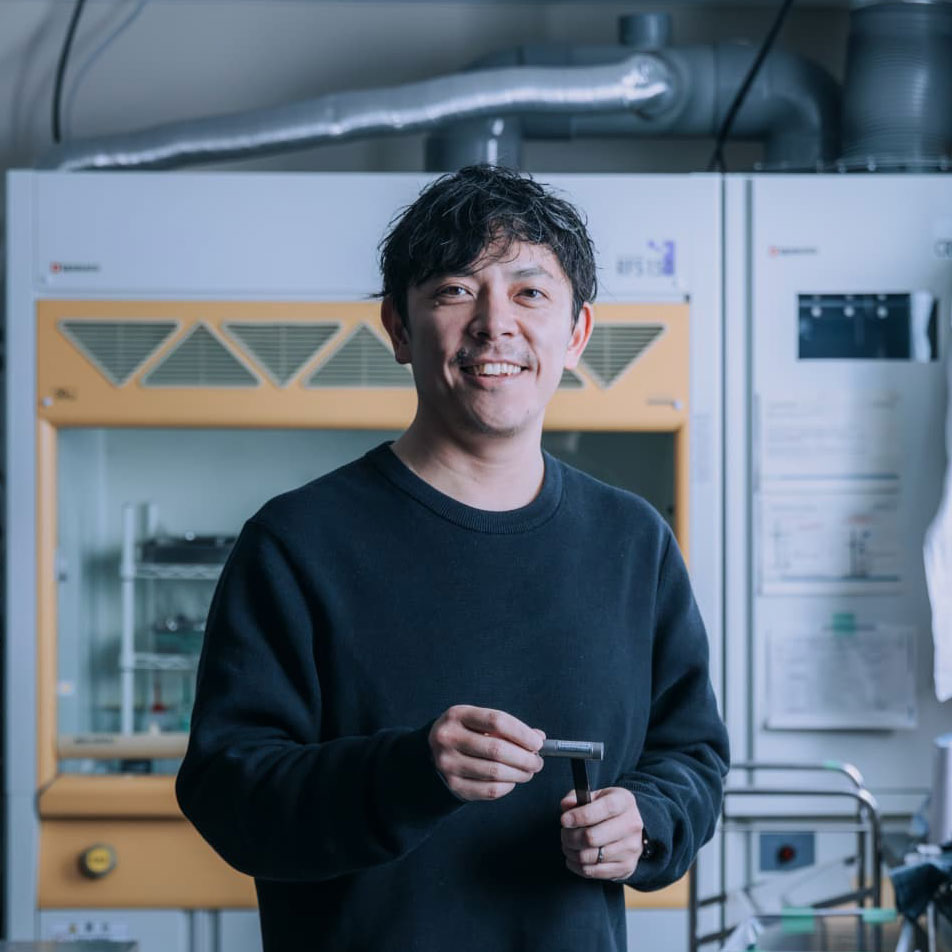
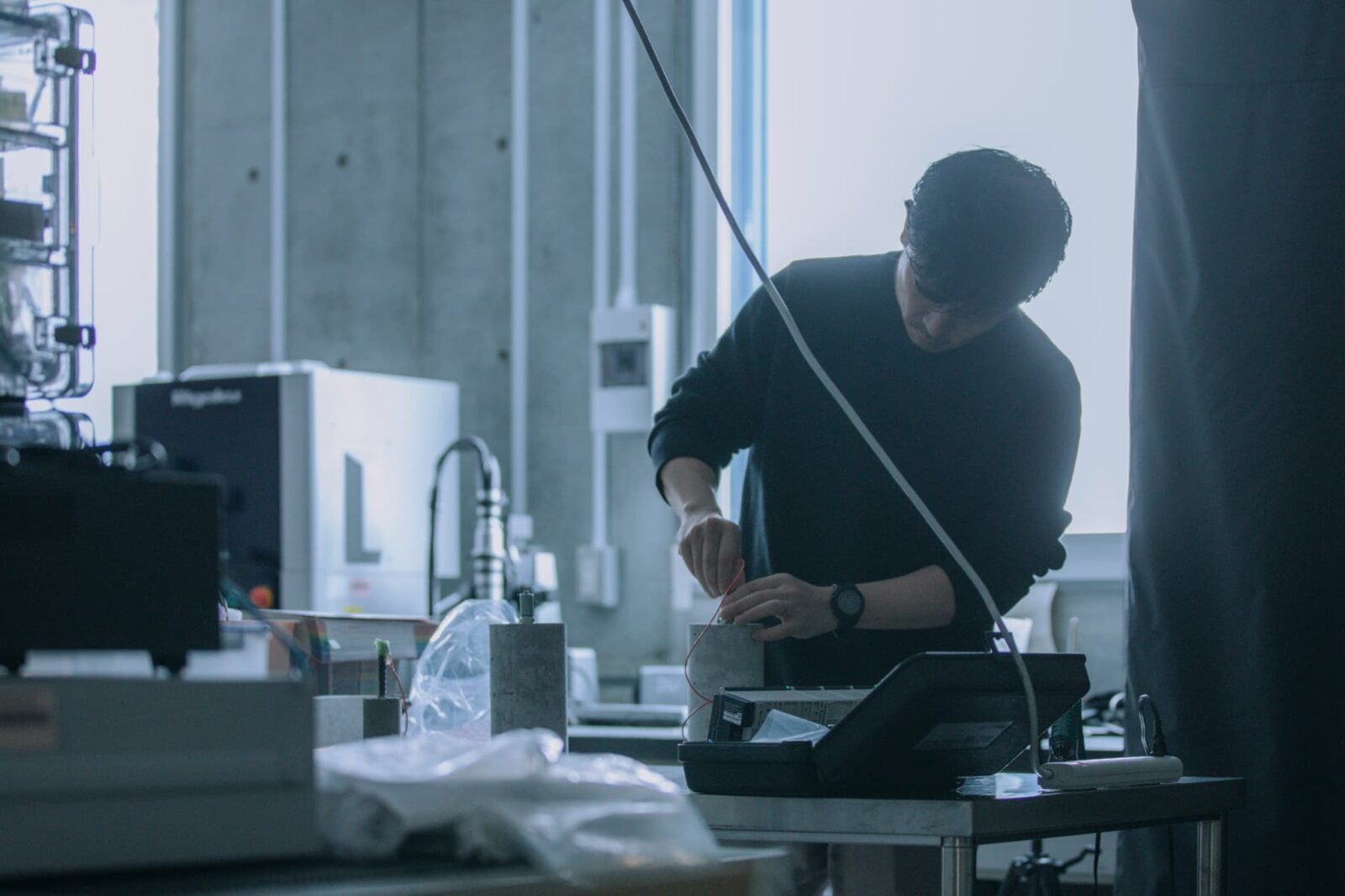
As the share of aged infrastructure, such as roads and bridges, across Japan is projected to rise sharply, there is a growing demand for innovative technologies that can help address shortages of qualified personnel and growing maintenance budgets. Associate Professor Katsufumi Hashimoto and his colleagues at the Environmental Material Engineering Laboratory are developing a new diagnostic method that uses unsupervised AI deep learning to detect internal cracks in concrete structures. Their research explores the possibilities of a future in which humans and AI work together in infrastructure maintenance.
The growing challenge of aging infrastructure
Concrete is one of the most widely used construction materials in the world. Made from cement, sand, water, and aggregates such as gravel, it is extremely strong under compression but relatively weak under tension. To compensate for this weakness, concrete structures are reinforced with steel. However, over time small cracks can develop inside the material. When water or salt penetrates these cracks, the steel reinforcement may corrode, gradually weakening the structure and eventually leading to serious deterioration.
“I don’t think anyone imagined that a road could suddenly collapse like that,” says Associate Professor Katsufumi Hashimoto, his words carrying a sobering weight. Japan’s infrastructure is rapidly aging. In the next 20 years the proportion of facilities that fall under “more than 50 years old” category will rapidly increase according to the 2022 White Paper on Land, Infrastructure, Transport and Tourism.
That includes 75% of road bridges, 52% of tunnels, and 65% of river management facilities such as floodgates and dams. The tragic road collapse in Yashio City, Saitama Prefecture, on January 28, 2025, brought the risks associated with aging infrastructure into sharp public focus in Japan.
“Is it okay to continue using it?” First steps towards using AI aid in internal cracks assessment
AI-based concrete inspection methods are moving beyond laboratory experiments, and several approaches combining image analysis with AI have shown potential for practical use. For example, combination of AI-based imaging techniques with drones would allow detecting surface-level cracks in hard-to-access areas such as high-rise buildings and bridges. However, imaging technologies have limitations in detecting sub-surface defects. The width of cracks observed on the surface alone often does not provide sufficient information to estimate how those cracks are progressing inside the material.
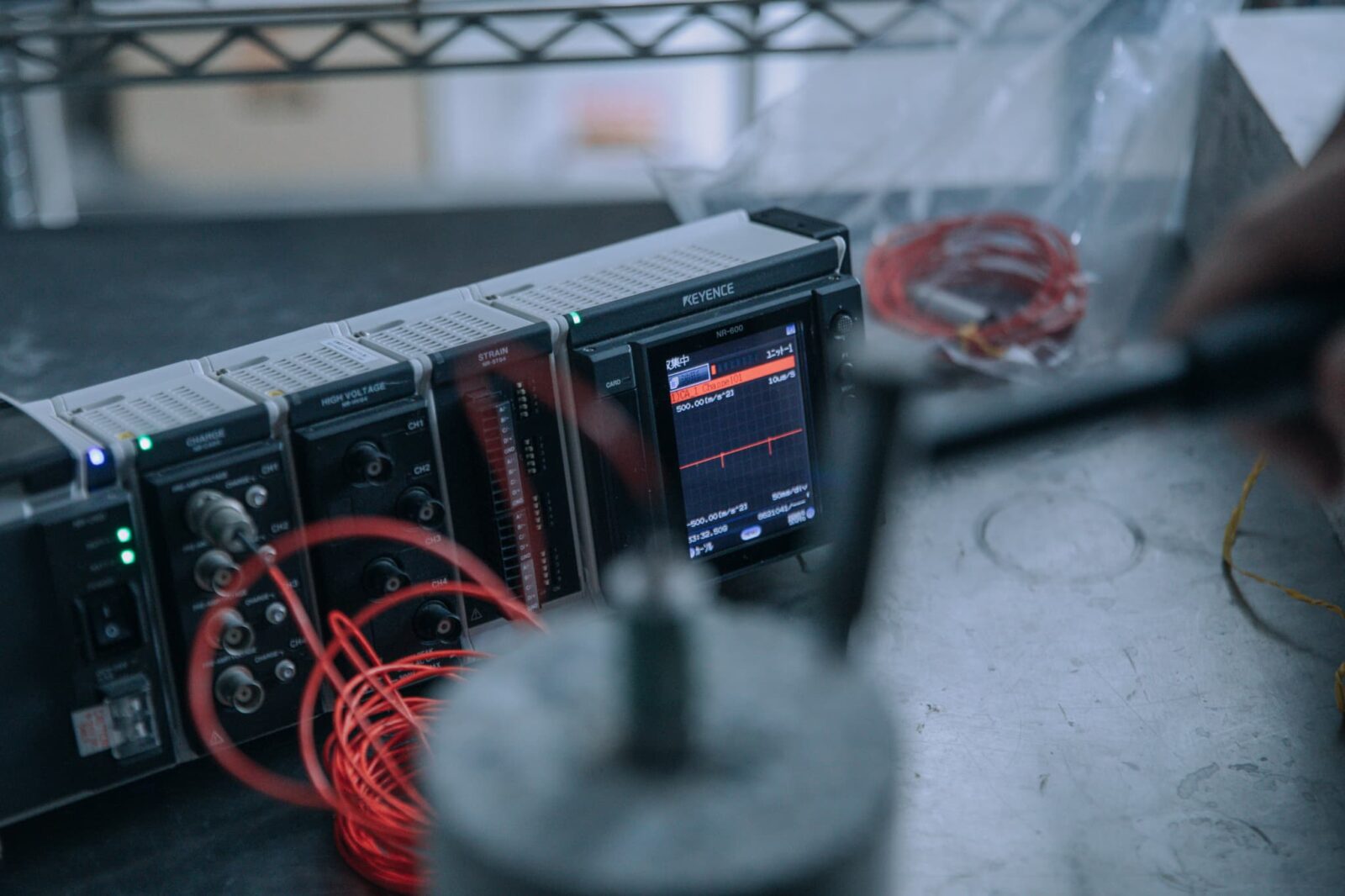
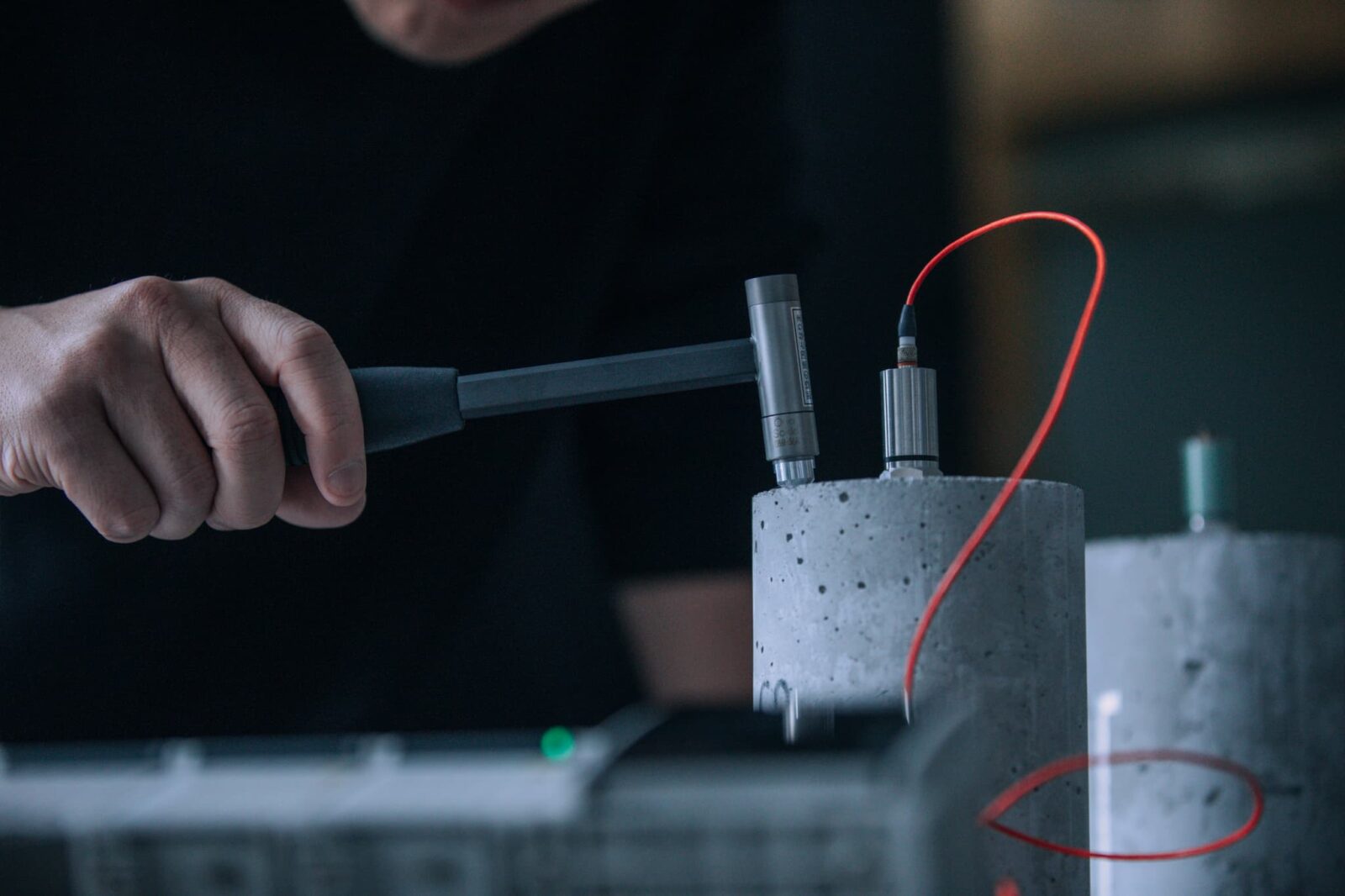
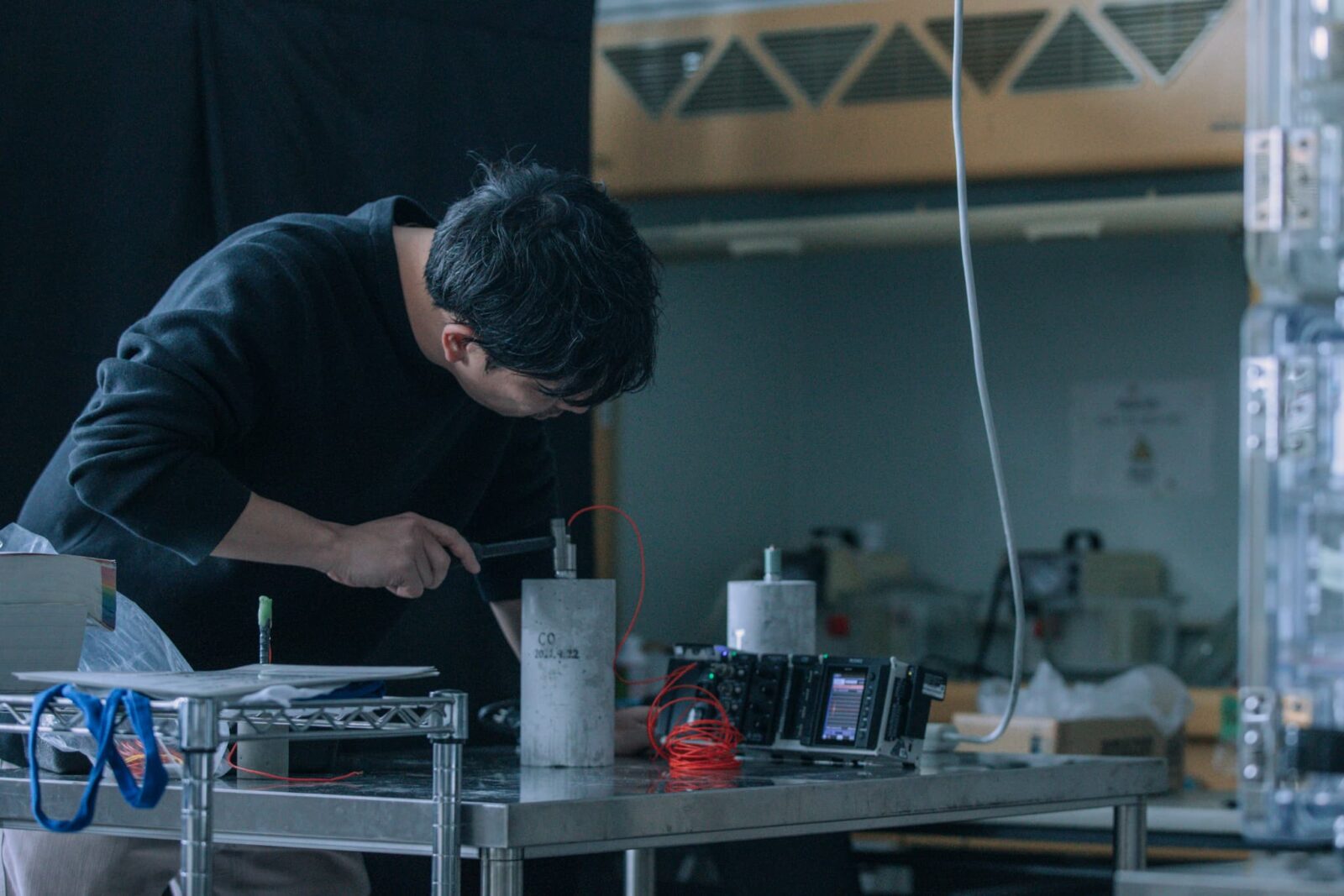
Well-established and widely used in Japan and around the world non-destructive method for sub-surface cracks detection in concrete is Impact-echo. In this developed in the United States in the mid-1980s technique a specialized device generates stress waves by tapping the surface of a structure and the resulting elastic wave responses are then recorded by a receiver. The inspector must interpret spectral peaks to determine whether a defect exists. For better interpretation the results are converted from time domain into the frequency domain, but even with the aid of additional techniques, accurately estimating the presence and size of cracks requires extensive training and expertise.
“Crack propagation varies greatly depending on the concrete mix proportion, environmental conditions such as temperature and moisture, traffic loads, and the structural form, which determines how external forces act on the structure”, Dr. Hashimoto explains. “Interpreting the data obtained by impact-echo is time-intensive and costly process”.
Until now, maintenance and inspection engineers across Japan have relied on their expertise and hands-on knowledge to interpret differences in waveforms and make accurate assessments. However, with rapidly aging infrastructure and aging population, availability of enough trained experts across Japan, especially in some remote areas, may soon become a problem. Can feeding a lot of training data to AI help solve the problem?
Before answering that question, Dr. Hashimoto points out, “First, we need to consider the changing social needs for nondestructive testing of civil infrastructure.”
“In the past, the development of non-destructive testing focused on achieving greater measurement accuracy. Now, with technological advances, we have gained a certain level of trust in these methods. The emerging need is the ability to make quick and reliable judgments.
It is not just about how many cracks there are or how large they are, but how dangerous they might be. Our goal is to connect inspection results to the decision-making, to answer the question: is it safe or not safe?”
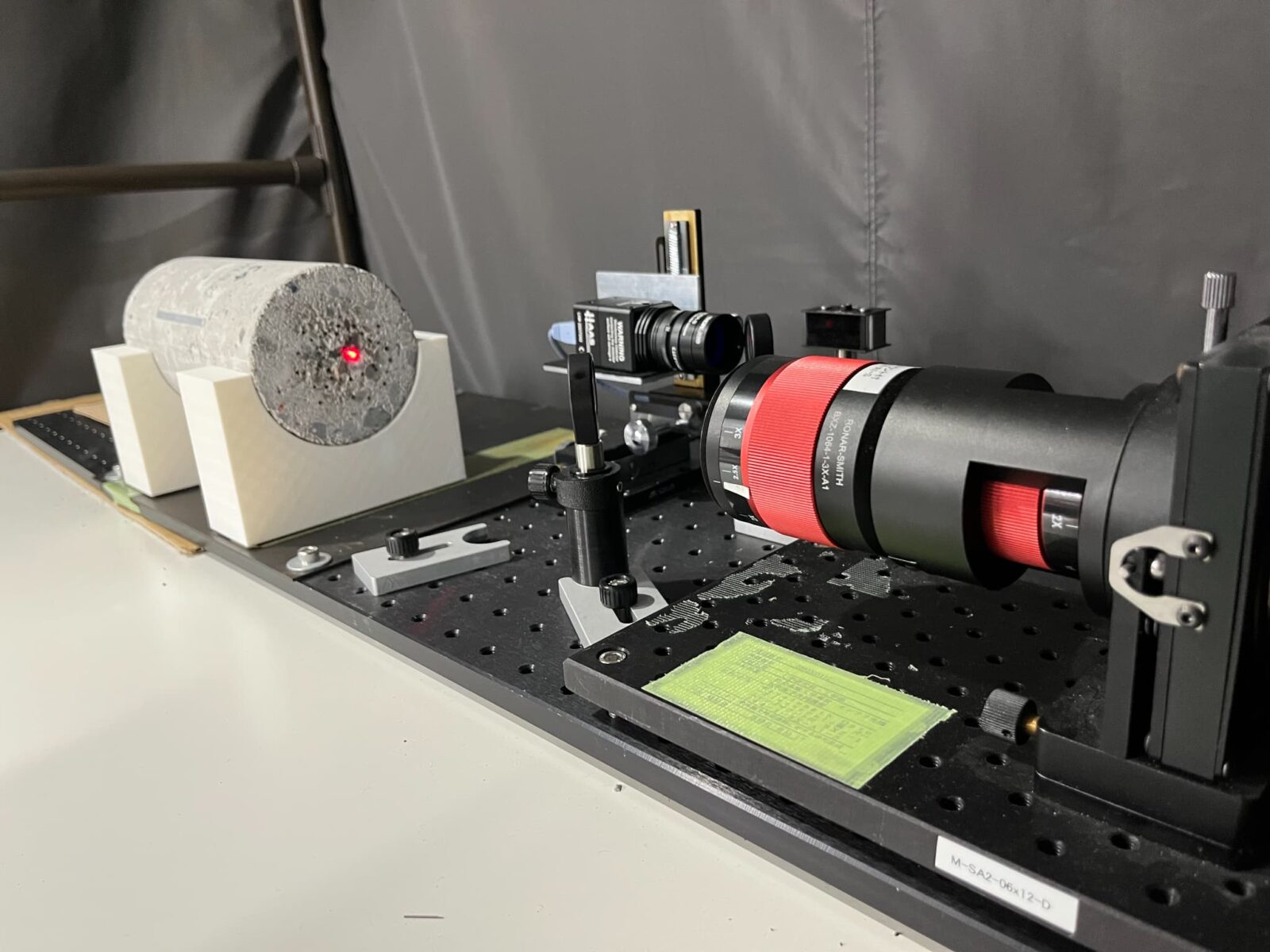
In their latest work, Dr. Hashimoto and his colleagues used an unsupervised deep learning approach based on an auto-encoder. By applying the Maximum Squared Error (MaXSE) loss function, the system measures how much the signals of elastic wave propagation in the concrete of test specimens with artificially induced cracks deviate from those in the intact specimen. This deviation is expressed as an “Abnormality Index,” where higher values indicate more significant structural irregularities. Although the approach has so far been tested on a limited number of samples, incorporating more diverse training data could eventually lead to a simple diagnostic tool that engineers can interpret quickly.
Contributing to a future society where humans and AI coexist
Infrastructure Maintenance Award, established by the Japanese government in 2016 aims to promote innovation and sharing of best practices across industry, academia, and the public sector. Associate Professor Hashimoto has been named among the recipients three times. Most recently, at the 9th ceremony held in January 2026, a team including Koken Engineering Co., Ltd., Professor Hiroshige Dan of Waseda University, and Dr. Hashimoto were awarded for AI-based impact sounding management system, Wave Brainer PRO.
Drawing on insights from Professor Hiroshige Dan, a specialist in social systems engineering, Dr. Hashimoto believes that the greatest obstacle to implementing AI-based diagnostic methods may be the psychological resistance that often accompanies the introduction of new technologies into society.
“Let me give you an example,” Dr. Hashimoto says. “If someone told you, ‘This roller coaster is safe because AI says so,” would you feel completely comfortable to get on? Wouldn’t most of us still want an experienced technician to check everything carefully? The question is not whether we should choose engineers or AI. Rather, it is how humans and AI can coexist. I feel that this research ultimately raises that very question.”
“Students in our lab come from countries such as Thailand, where infrastructure must cope with heat, sand, and the effects of climate change. In Hokkaido, by contrast, engineers confront cold climates, and in places like Kitami the weather can be particularly extreme, with harsh winters and hot summers,” concludes Dr. Hashimoto. “Environmental challenges, availability and training of experts may vary greatly, but the need for safe infrastructure is shared around the world. Developing an accessible assessment tool is our goal.”
Faculty of Engineering, Division of Civil Engineering
Associate Professor Katsufumi Hashimoto