
Featured Research
-
Impact-echo for different level cracks detection in concrete with artificial intelligence based on un/supervised deep learning
Aging concrete infrastructure such as bridges and tunnels requires effective inspection to ensure safety and durability, particularly for detecting invisible internal cracks subjected to structural integrity. Impact-echo, which is one of non-destructive testing methods, is widely used but costly and time-consuming with relying on skilled and experienced analysis. This study integrates AI with impact-echo data to improve crack detection. Supervised deep learning using FFT-transformed signals enables accurate classification of multiple crack levels, including intact condition of concrete. However, data labeling for each existing structures is impractical, so an unsupervised approach using an auto-encoder is proposed to identify internal crack levels through anomaly-based indices without labeled data.
Jeero Pandum, Katsufumi Hashimoto, Takafumi Sugiyama, Wanchai Yodsudjai
Effect of flow residence time on the flame-retardant performance of fluorine-based flame retardant: Comparison of blowoff limits of CH₂F₂ and CH₄
The article investigates the combustion characteristics of hydrofluorocarbon (HFC) and hydrocarbon (HC) fuels to understand the increased flammability of fluoropolymers like ETFE under microgravity. Key findings: CH₂F₂ exhibits minimal sensitivity of blowoff limit to oxygen, unlike CH₄. CH₂F₂ flames have lower temperatures and suppressed H and OH radical formation, due to dominant HF-producing pathways inhibiting radical chain reactions. Despite susceptibility to blowoff, CH₂F₂ maintains high adiabatic flame temperature, allowing combustion at low oxygen if sufficient residence time is provided.
Yusuke Konno, Ayuto Ota, Nozomu Hashimoto, and Osamu Fujita
Solid-phase fluorescence excitation-emission matrix spectroscopy of soil, fulvic acid fractions, and clay mineral complexes: Evidence from red shift of fluorescence maxima associated with aggregation
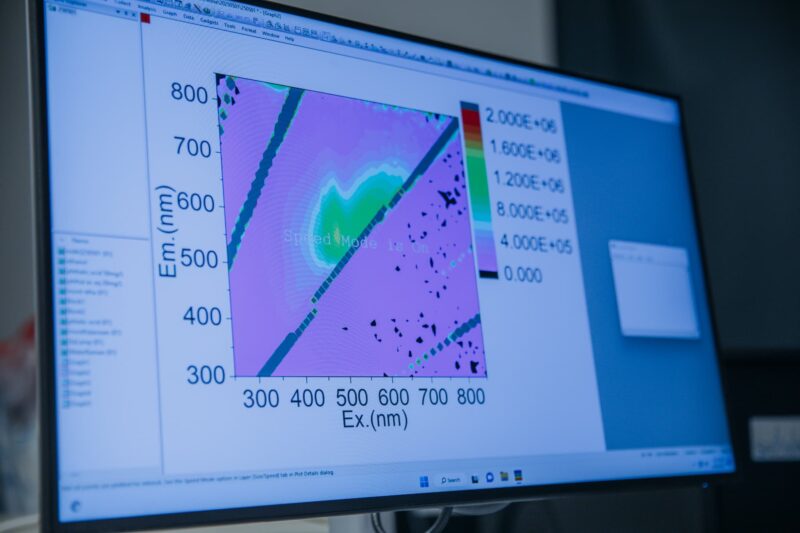
Most of the analysis of natural organic matter (humic substances) in soil is carried out in a solution state by an alkali extraction operation. However, this approach addresses concerns regarding the potential alteration of humic substances during alkaline extraction, which may cause these substances to lose their original structure. In this study, as a non-extraction and non-destructive method, solid-phase fluorescence (excitation-emission matrix) spectroscopy (SPF-EEM) was applied for the first time to a standard humic substance and its complex with clay. It was found that the excitation-emission wavelength could shift according to the state of solution, complex, aggregate, etc.
Yuki Nakaya, Takashi Hirose, Ryuichi Tamori, Nobuhide Fujitake, Satoru Nakashima, Hiroshi Yamamura, and Hisashi Satoh
Development of hydrogen production technology using plasma-assisted water electrolysis
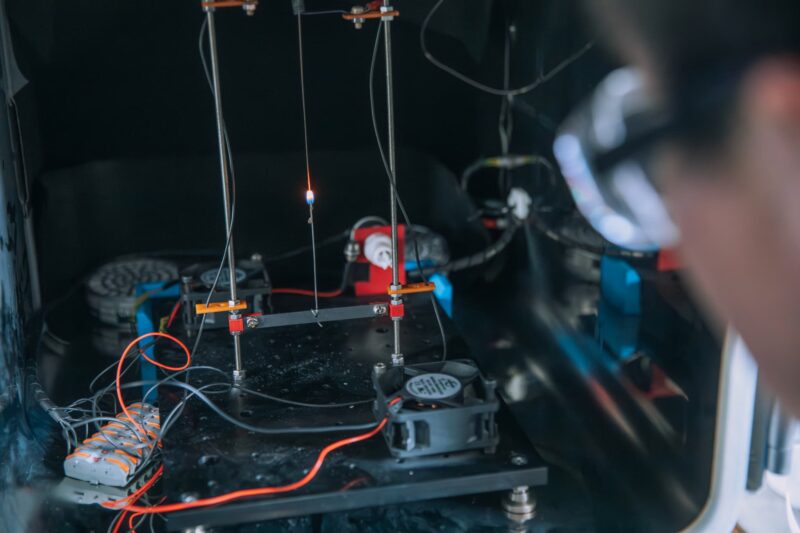
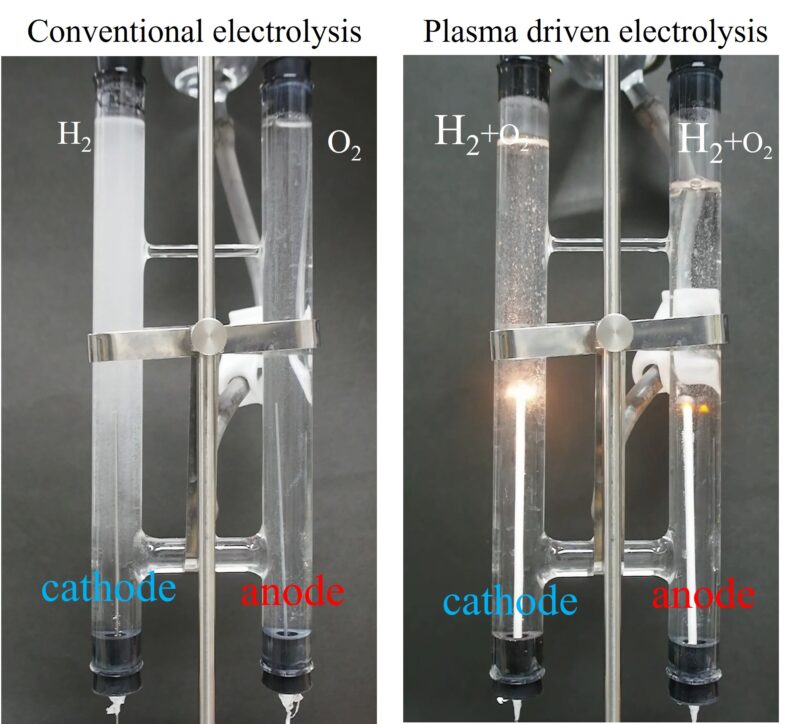
In “contact glow discharge,” an electrolytic reaction where plasma and water come into contact, phenomena where the Faraday efficiency exceeds 1 have been reported, but the reaction mechanism remains unclear. We aim to develop a plasma-driven electrolysis method that generates stable direct-current plasma in water, elucidate the mechanism behind the phenomenon where hydrogen production increases significantly compared to conventional electrolysis, and establish a highly efficient hydrogen production technology.
Grant-in-Aid for Challenging Research (Pioneering) 2025.6.27~2029.3.31
Selected Articles
-
Design of micro-electro-mechanical systems-driven environmental sensor for steel corrosion detection in concrete using sacrificial anode metal sheets
This study develops a MEMS (Micro-Electro-Mechanical Systems)-based monitoring system incorporating MEH (Micro-Energy Harvester) technology to identify chloride-induced corrosion-prone areas in RC structures. The proposed system integrates sacrificial anode metal sheets (SAMS) into MEMS–MEH devices, enabling simultaneous corrosion detection and energy harvesting. In tracking corrosion progress through frequency shifts while generating power, the system operates without batteries or external power. The results help define target operating frequencies for reliable MEMS–MEH performance in predicting corrosion conditions in RC structures.
Nicharin Nithimethaporn, Katsufumi Hashimoto, Hiroyuki Mitsuya, Hisayuki Ashizawa, Takuma Ishiguro, and Wanchai Yodsudjai
-
Application of unsupervised AI-assisted acoustic wave sound analysis for non-destructive detection of steel corrosion induced deterioration
Reinforced concrete structures require reliable monitoring to ensure safety and efficient maintenance. Non-destructive testing methods such as tapping sound inspection are widely applied. However, the diagnosis results often depend on technical expert skill and experience. This study proposes an easy-to-use, AI-based evaluation method for tapping sounds using unsupervised deep learning. Laboratory tests were carried out on reinforced concrete beams with simulated steel bar corrosion. The method proposes an anomaly index that reflects corrosion progress and surface cracking. The results demonstrate that acoustic inspection with AI can support early damage detection and improve condition assessment of concrete structures.
Nopphanan Phannakham, Katsufumi Hashimoto, Yasuhiko Sato, and Naoshi Ueda
-
A multi-module deep learning framework with graph-based network and crack attention for tunnel lining crack segmentation from LiDAR point cloud
Cracks in railway tunnels threaten safety and require efficient monitoring. This study introduces PointCrackNet, a deep learning method that detects tunnel lining cracks directly from LiDAR point clouds. By combining graph-based convolution, attention mechanisms, and a crack-enhancement module, the model accurately captures fine crack details while maintaining global structural context. A tailored loss function addresses class imbalance and improves crack continuity. Tested on a large-scale LiDAR dataset from a real railway tunnel, PointCrackNet outperformed existing methods. The approach enables automated tunnel inspection and supports smart, data-driven infrastructure maintenance.
Shanpeng Liu, Koichi Isobe, Junling Si, Diyuan Li, and Daoju Ren
Construction and Building Materials Volume 494, 2025, 143383
-
Effects of Combined Deterioration of Steel Corrosion and Freeze-thaw Cycles on the Pull-out Behavior of Deformed Bars in Concrete
This study is the first to systematically investigate how loading sequence and cracking history affect the bond performance of deformed bars under the combined deterioration caused by steel corrosion and freeze–thaw action, a serious problem in concrete structures in cold regions. Through controlled experiments simulating realistic deterioration paths, the study clarified the influence of damage sequence on structural performance. In particular, it demonstrated that pre-existing cracks significantly accelerate deterioration by promoting moisture ingress and freeze–thaw damage. These findings highlight that considering damage history is essential for reliable durability assessment and long-term maintenance planning of aging reinforced concrete infrastructure.
Muhmudul Hasan Mizan, Ryuhei Hayakawa, and Koji Matsumoto
-
Superfluid dripping: a new analog for continuous time crystals
The dripping behavior of superfluid helium-4 has been found to be consistently discretized, even when flow rates vary. This unexpected phenomenon suggests that the superfluid dripping system exhibits time crystallinity by spontaneously breaking continuous time translation symmetry. The condition for the emergence of this continuous time crystal is that the edges of the pendant droplets, which hang from the underside of the cup, can move freely—a characteristic specific to superfluid dripping. This free motion leads to volume-independent oscillation periods for the droplets, effectively eliminating the influence of fluctuations in the flow rates.
Shota Takamatsu, Ryota Yamane, Tomoyuki Tani, Yuri Ishimoto, Keito Miyake, Yuki Aoki, and Ryuji Nomura
-
Mesoscale modeling of anisotropic compressive behavior and pull-out performance of 3D printed concrete with steel bars using 3D RBSM
This study uses a 3D Rigid Body Spring Model (RBSM) to analyze the anisotropic behavior of 3D-printed concrete (3DPC) with steel reinforcement. Validated by experiments, the research highlights how the mesoscale structure—specifically porous interlayer interfaces—affects performance. Results indicate that specimens loaded parallel to the printing direction exhibit superior compressive strength and bond performance. Conversely, loading perpendicular to the layers leads to stress concentrations and weaker bonds due to interfacial zones. Overall, this research provides a predictive framework for optimizing the structural integrity of 3DPC through mesoscale modeling.
Jiaxu Yao, Jie Luo, Minghong Qiu, and Kohei Nagai
-
Substituent Effects on Electrocyclic Reactions: Ultrafast Ring-Opening of α-Phellandrene Stimulated by Impulsively Excited Molecular Vibrations
Zhiyi Zhou, Kenichiro Saita, Yusuke Minegishi, Tetsuya Taketsugu, and Taro Sekikawa*
-
Broadband Phase Retardation with Palladium Coated Mirrors for M-edge XMCD in the 40–70 eV Range
Furkan Aksay, and Taro Sekikawa
-
Reliable pathfinding problems for a correlated network: A linear programming problem in a hypergraph
-
Self-organized luminous pattern formation observed above the anode surface of a DC glow discharge in pure He
To elucidate the mechanism of self-organization phenomena in luminescence observed on the anode surface during atmospheric pressure direct current glow discharge generation, we investigated luminescence patterns while varying pressure in a pure He environment. The results revealed that luminescence patterns appear when the product of pressure p and electrode distance d (pd) is high. Moving forward, we will connect this to reaction-diffusion systems, a method used in mathematics to obtain self-organization phenomena.
Toshiaki Miyazaki, Jan Kuhfeld, Koichi Sasaki, and Naoki Shirai
-
SH wave scattering in Eringen’s nonlocal elastic solid using the method of fundamental solutions
Eringen’s nonlocal elastic solid is a mechanical model that enables the analysis of phenomena difficult to describe using classical elasticity. This study analyzed wave scattering in nonlocal elastic solids using the method of fundamental solutions, a meshfree numerical method. An analytical representation of the traction operator specific to nonlocal elasticity was derived, and scattering characteristics relevant to ultrasonic nondestructive testing were evaluated.
Akira Furukawa, Taizo Maruyama, Takahiro Saitoh, Sohichi Hirose, Davinder Kumar, Dilbag Singh, and Sushil K. Tomar
-
Protium enrichment by polymer electrolyte fuel cell with hydrogen gas circulation
A polymer electrolyte fuel cell (PEFC) equipped with a gas recirculation system was employed for deuterium separation. Incorporating a hydrogen gas tank into the gas recirculation line achieved significant hydrogen concentration. During fuel cell operation, hydrogen concentration in the gas increased, yielding a high separation factor. This improvement in separation efficiency is thought to result from enhanced separation efficiency via gas-phase chemical exchange reactions.
Toranosuke Nago, Mikito Ueda, and Hisayoshi Matsushima
-
Characterizing the Settlement of Activated Sludge Based on AI-Assisted Analysis of Moving and Still Images
In the final process of wastewater treatment, the settleability of activated sludge, a mass of microorganisms responsible for the adsorption and decomposition of pollutants, is important. In order to contribute to the improvement of the efficiency of wastewater treatment plants in rural areas and developing countries, which have problems in terms of economical human resources, this study proposed a low-cost settleability diagnosis method that uses AI-based technology to analyze still images of activated sludge using inexpensive digital microscopes and moving images of activated sludge settling using smartphone camera functions.
Yuki Nakaya, Kai Sugino, Shota Ishizaki, Reiko Hirano, Shuhei Noda, Shinobu Moniwa, Yukio Hiraoka, and Hisashi Satoh
Selected Projects
-
Development of Ethical Mining Technologies to Achieve Responsible Mineral Sourcing: The Future of Mining Development Enabled by Blockchain
Assistant Professor Okada of Hokkaido University, with support from the JST Sakura Science Program, will invite eight faculty members and students from Aksum University in Ethiopia. Using blockchain and GIS, they will examine new technological frameworks for ensuring transparency in responsible mineral sourcing and for environmentally conscious resource development through joint research, practical exercises, and presentations of results.
Sakura Science Exchange Program 2026.2.4~2026.2.18
-
Evaluation of Phosphorus Release from Lake Sediments Using Passive Sampling and Phosphate Oxygen Isotope Analysis
In eutrophic lakes, the persistent high phosphorus concentration in lake water poses a significant problem. This study employs passive sampling techniques and phosphorus oxygen isotope analysis to identify the sources supplying phosphorus to the lake water. This approach will also reveal contributions from lake sediments, which have not been evaluated previously. This research is expected to contribute to the assessment and conservation of lake water environments.
Akira Hafuka, Takuya Ishida, and Kazuto Sano
The Sumitomo Foundation, Grant for Environmental Research Projects 2025.11.01~2026.11.30
-
Green Conversion of Palm Oil Wastes into Bio-Compressed Natural Gas (Bio-CNG) for Renewable Energy Diversification in Malaysia
This collaborative research aims to enhance the production and upgrading of bio-compressed natural gas (Bio-CNG) by effectively utilizing two major byproducts generated from Malaysia’s palm oil industry: palm oil mill effluent (POME) and empty fruit bunches (EFB). Specifically, the Japanese team will develop and support the operation of anaerobic digestion processes, conduct microbial community analyses, and apply machine-learning-based data-driven modelling to improve process stability and enable rapid and precise optimization of CO2 adsorbent performance. The Malaysian team will optimize pretreatment and fermentation conditions for EFB and lead the development and evaluation of gas separation technologies using EFB-derived biochar. Through collaborative research between the two countries, the project is expected to contribute to establishing a renewable energy technology platform that supports Malaysia’s transition toward a decarbonized energy society
Mamoru Oshiki, and Adeline Seak May CHUA
Networked Exchange, United Strength for Stronger Partnerships between Japan and ASEAN (NEXUS) 2026.1〜2028.12
Most Read
Keywords
Concrete Concrete Engineering CO₂ absorption Environmental Engineering helium Hydrogen Mechanochemistry Superfluid waste concrete wet-dry cycle
Research Field
Applied Chemistry Applied Physics Applied Quantum Science and Engineering Architecture Center for Advanced Research of Energy and Materials Civil Engineering Environmental Engineering Materials Science and Engineering Mechanical and Aerospace Engineering Sustainable Resources Engineering
Year