
Featured
-
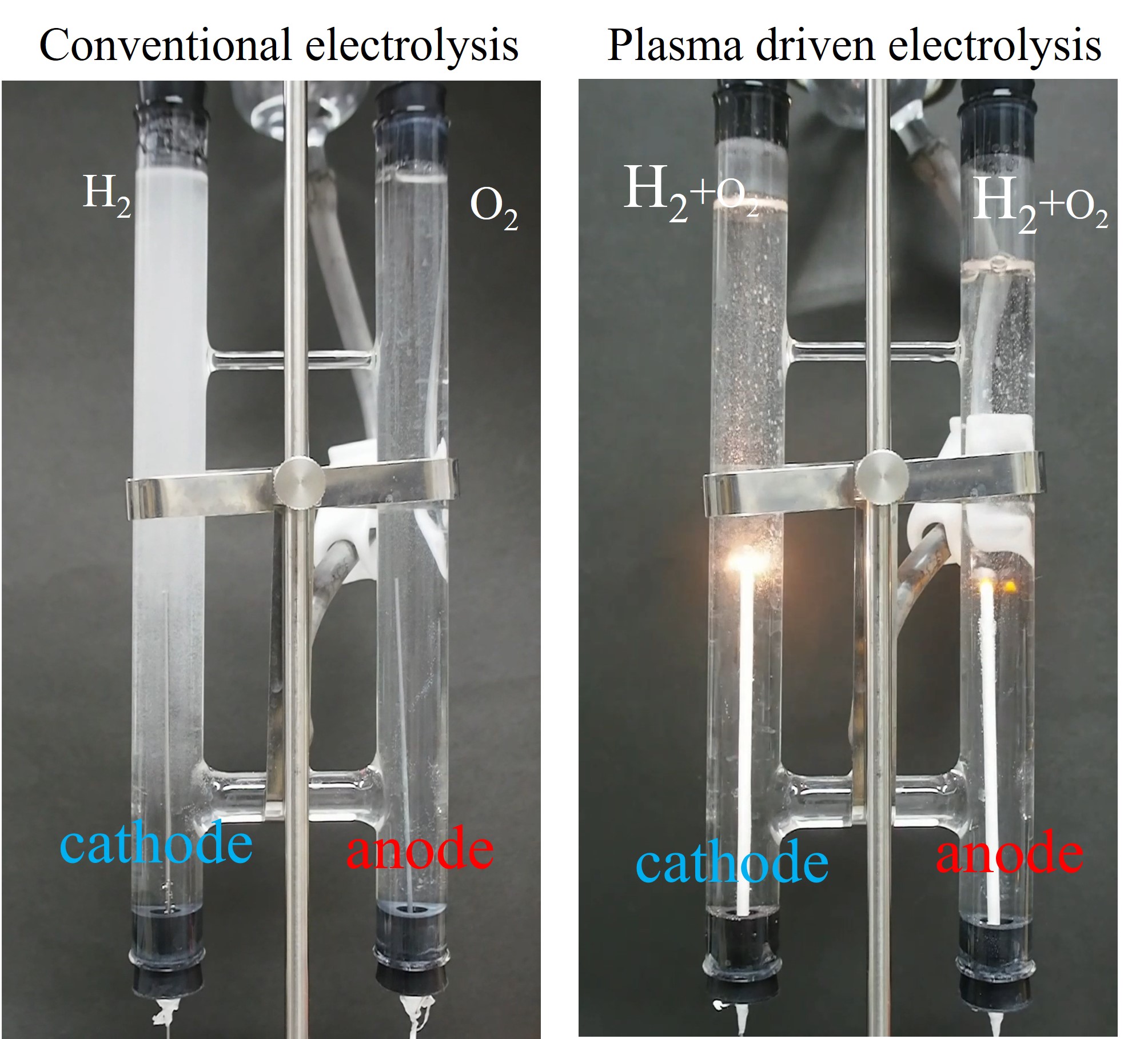
Development of hydrogen production technology using plasma-assisted water electrolysis
In “contact glow discharge,” an electrolytic reaction where plasma and water come into contact, phenomena where the Faraday efficiency exceeds 1 have been reported, but the reaction mechanism remains unclear. We aim to develop a plasma-driven electrolysis method that generates stable direct-current plasma in water, elucidate the mechanism behind the phenomenon where hydrogen production increases significantly compared to conventional electrolysis, and establish a highly efficient hydrogen production technology.
-
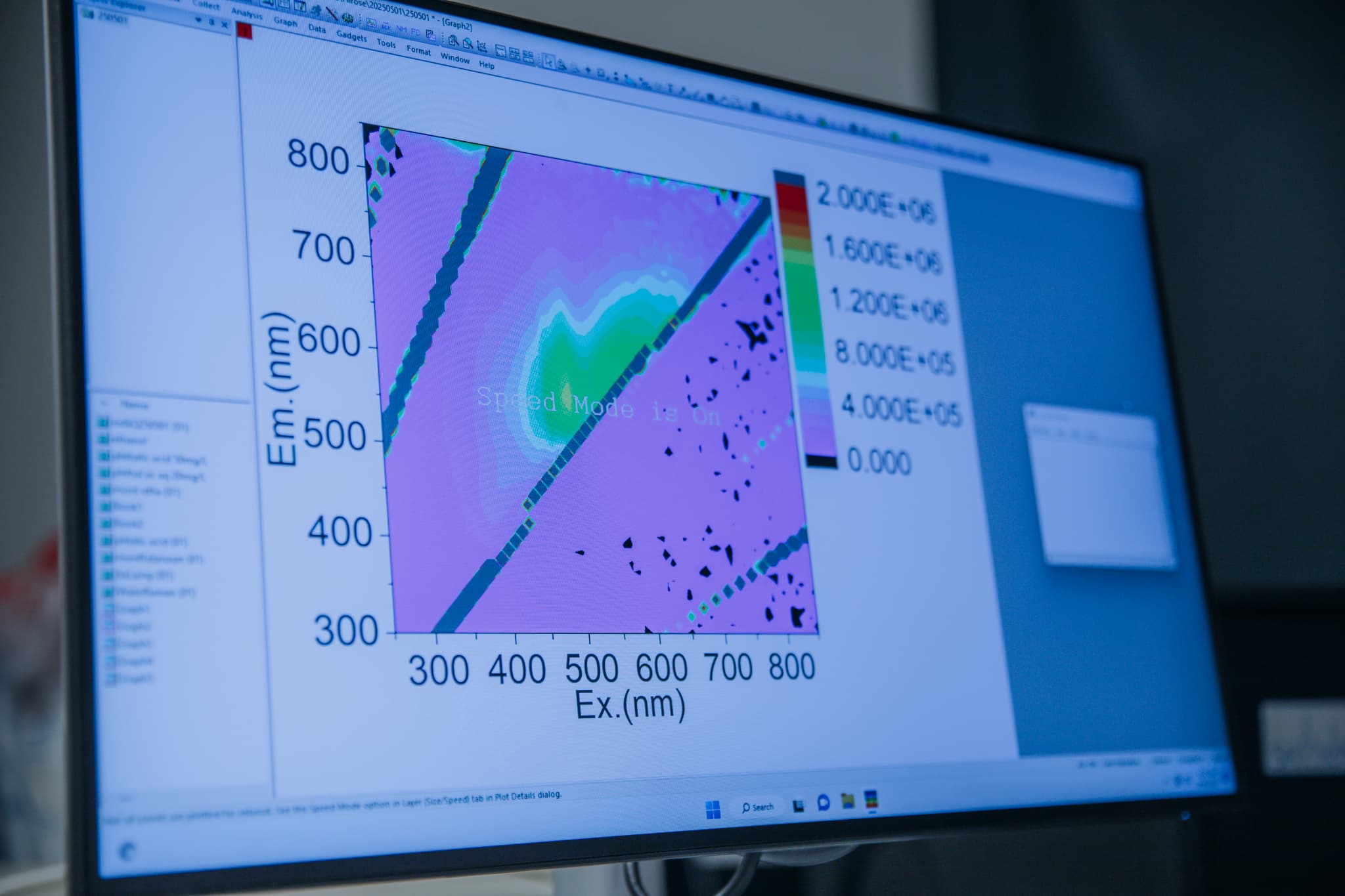
Solid-phase fluorescence excitation-emission matrix spectroscopy of soil, fulvic acid fractions, and clay mineral complexes: Evidence from red shift of fluorescence maxima associated with aggregation
Most of the analysis of natural organic matter (humic substances) in soil is carried out in a solution state by an alkali extraction operation. However, this approach addresses concerns regarding the potential alteration of humic substances during alkaline extraction, which may cause these substances to lose their original structure. In this study, as a non-extraction and non-destructive method, solid-phase fluorescence (excitation-emission matrix) spectroscopy (SPF-EEM) was applied for the first time to a standard humic substance and its complex with clay. It was found that the excitation-emission wavelength could shift according to the state of solution, complex, aggregate, etc.
-
Effect of flow residence time on the flame-retardant performance of fluorine-based flame retardant: Comparison of blowoff limits of CH₂F₂ and CH₄
The article investigates the combustion characteristics of hydrofluorocarbon (HFC) and hydrocarbon (HC) fuels to understand the increased flammability of fluoropolymers like ETFE under microgravity. Key findings: CH₂F₂ exhibits minimal sensitivity of blowoff limit to oxygen, unlike CH₄. CH₂F₂ flames have lower temperatures and suppressed H and OH radical formation, due to dominant HF-producing pathways inhibiting radical chain reactions. Despite susceptibility to blowoff, CH₂F₂ maintains high adiabatic flame temperature, allowing combustion at low oxygen if sufficient residence time is provided.
-
Impact-echo for different level cracks detection in concrete with artificial intelligence based on un/supervised deep learning
Aging concrete infrastructure such as bridges and tunnels requires effective inspection to ensure safety and durability, particularly for detecting invisible internal cracks subjected to structural integrity. Impact-echo, which is one of non-destructive testing methods, is widely used but costly and time-consuming with relying on skilled and experienced analysis. This study integrates AI with impact-echo data to improve crack detection. Supervised deep learning using FFT-transformed signals enables accurate classification of multiple crack levels, including intact condition of concrete. However, data labeling for each existing structures is impractical, so an unsupervised approach using an auto-encoder is proposed to identify internal crack levels…
-
Research and Development of Core Technologies for Next-Generation Semiconductor Microfabrication
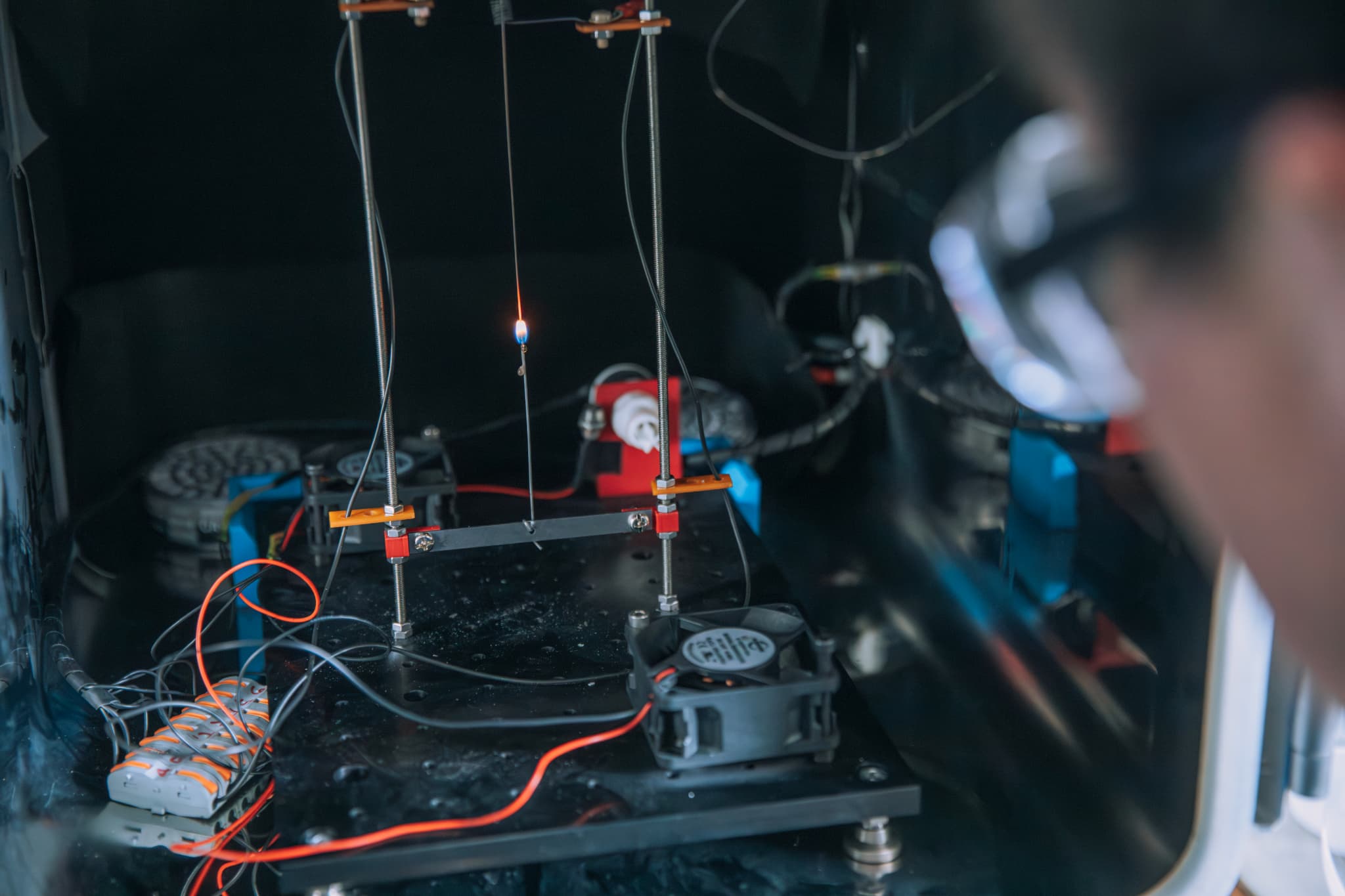
In April 2025, an R&D project for innovative fundamental technologies considered essential for the further development of next-generation semiconductor technologies has been launched, bringing together institutions and human resources with cutting-edge technologies related to EUV lithography (the overall principal investigator is Katsumi Midorikawa, special advisor to RIKEN). The research topics will mainly be the development of new lasers, mirrors for EUV, and laser microfabrication technology for back-end processing. In this project, Tomita will be responsible for the development of measurement and optimization techniques for the plasma for EUV light sources generated by the laser.
-
Creation of a Novel Evaluation Method for Assessing the Efficacy of Water Treatment Processes on Hard-to-Culture Viruses Without Relying on Conventional Cell Culture Approaches
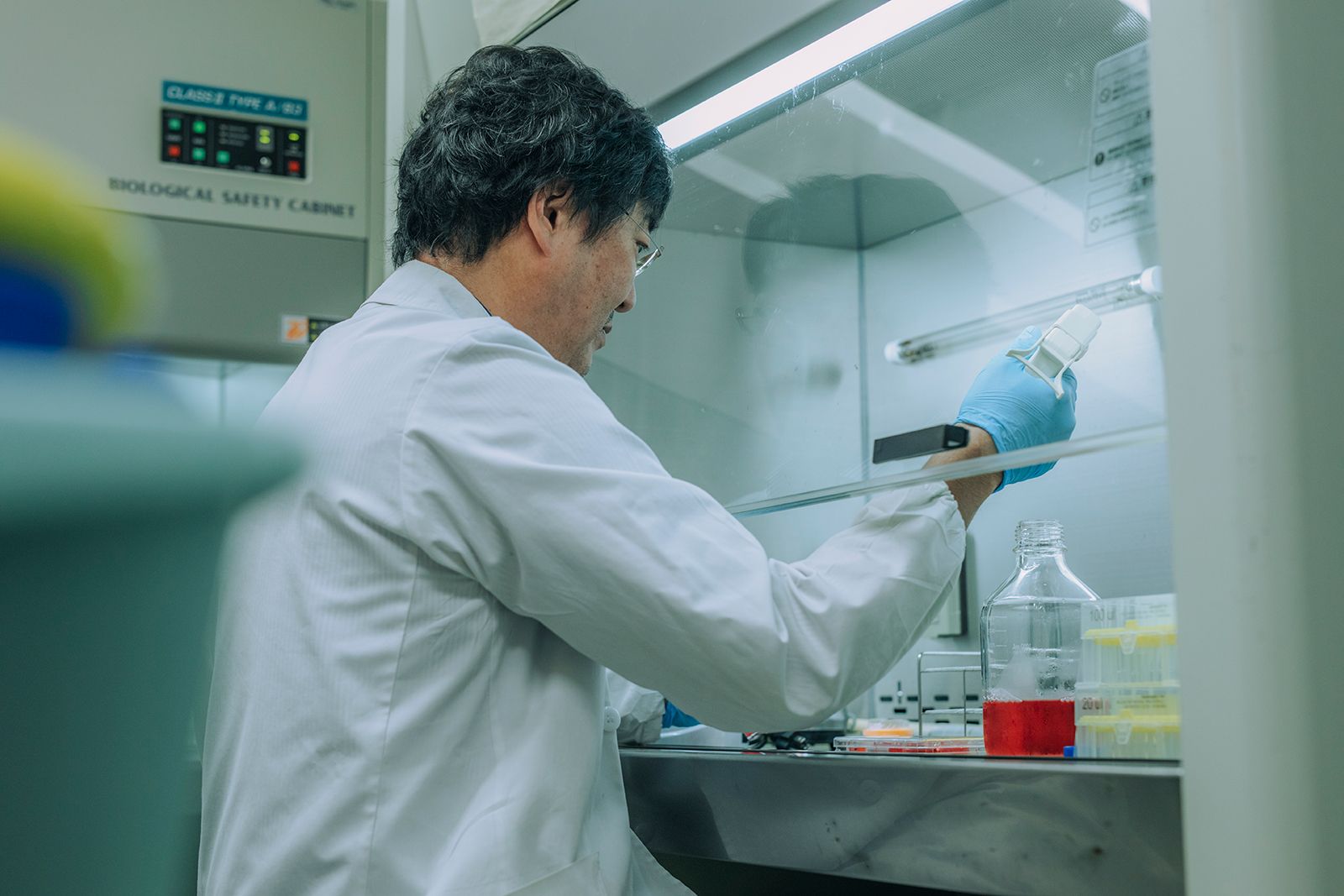
This study aims to elucidate the removability of “non-culturable” viruses, such as norovirus, in water treatment processes—whose behavior in such treatments remains completely unknown. In this study, virus-like particles (VLPs) composed of viral capsid proteins will be produced using genetic engineering techniques. By incorporating foreign genes into these VLPs using non-viral vector construction methods and applying them to water treatment experiments, we seek to establish a novel evaluation method for viral removability that does not rely on cultivation.
-
Mechanochemical activation of metallic lithium for the generation and application of organolithium compounds in air
Here we report a mechanochemical method for the direct generation of organolithium reagents from readily available organic halides and unactivated lithium metal (lithium wire) under bulk-solvent-free conditions. These reactions rapidly generate a diverse array of organolithium compounds at room temperature without special precautions against moisture and without temperature control.
-
The Detail Matters: Unveiling Overlooked Parameters in the Mechanochemical Synthesis of Solid Electrolytes
“Simply mixing the reagents by hand for a short time in a mortar and pestle before mechanochemical synthesis dramatically improves the performance of the solid electrolyte. Hand mixing changes the crystallization behavior, improving the ionic conductivity of the solid electrolyte by up to an order of magnitude. This discovery will accelerate the search for efficient and logical new electrolyte materials, and ultimately the development of all-solid-state batteries.”