
Creation of a Novel Evaluation Method for Assessing the Efficacy of Water Treatment Processes on Hard-to-Culture Viruses Without Relying on Conventional Cell Culture Approaches
Taku MATSUSHITA, and Nobutaka SHIRASAKI
Grant-in-Aid for Scientific Research(A) 2025.4.1~2028.3.31
Genetic recombination for water safety: a novel look at norovirus
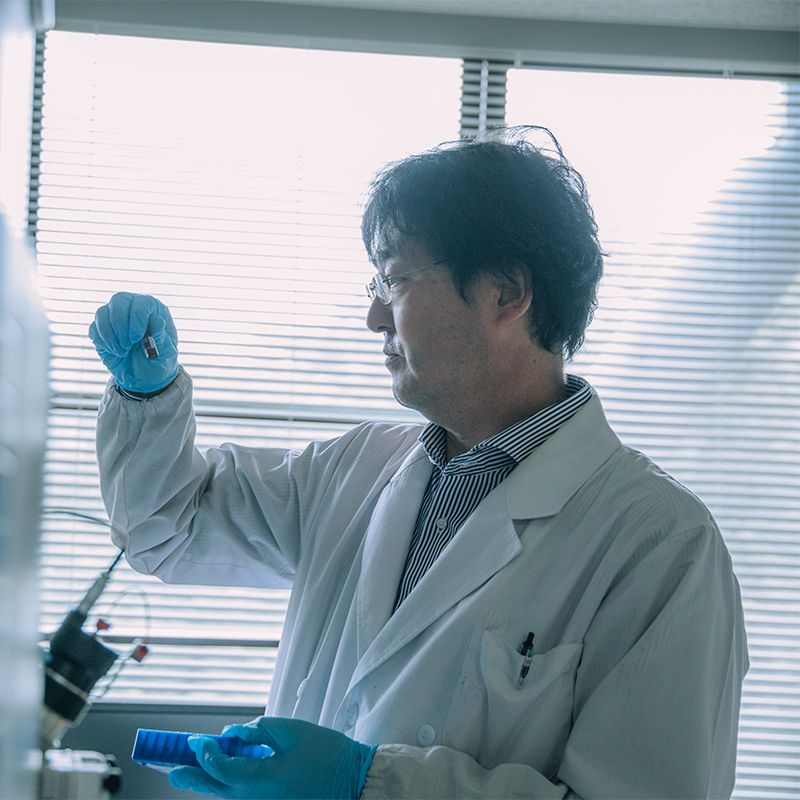
Professor Taku Matsushita of Hokkaido University’s Laboratory of Environmental Risk Engineering traces his passion for clean water back to his childhood in a town blessed with pristine water sources. Today, his research focuses on norovirus, a leading cause of viral gastroenteritis and a persistent challenge in the field of water treatment. To tackle existing knowledge gaps, he has turned to genetic engineering techniques used in medical research. His team’s work is paving the way not only for improved safety in routine water treatment, but also for the development of safer methods to study and manage emerging or difficult-to-handle viruses that may pose future public health risks.
Doesn’t grow = can’t be estimated? Taking on the norovirus challenge
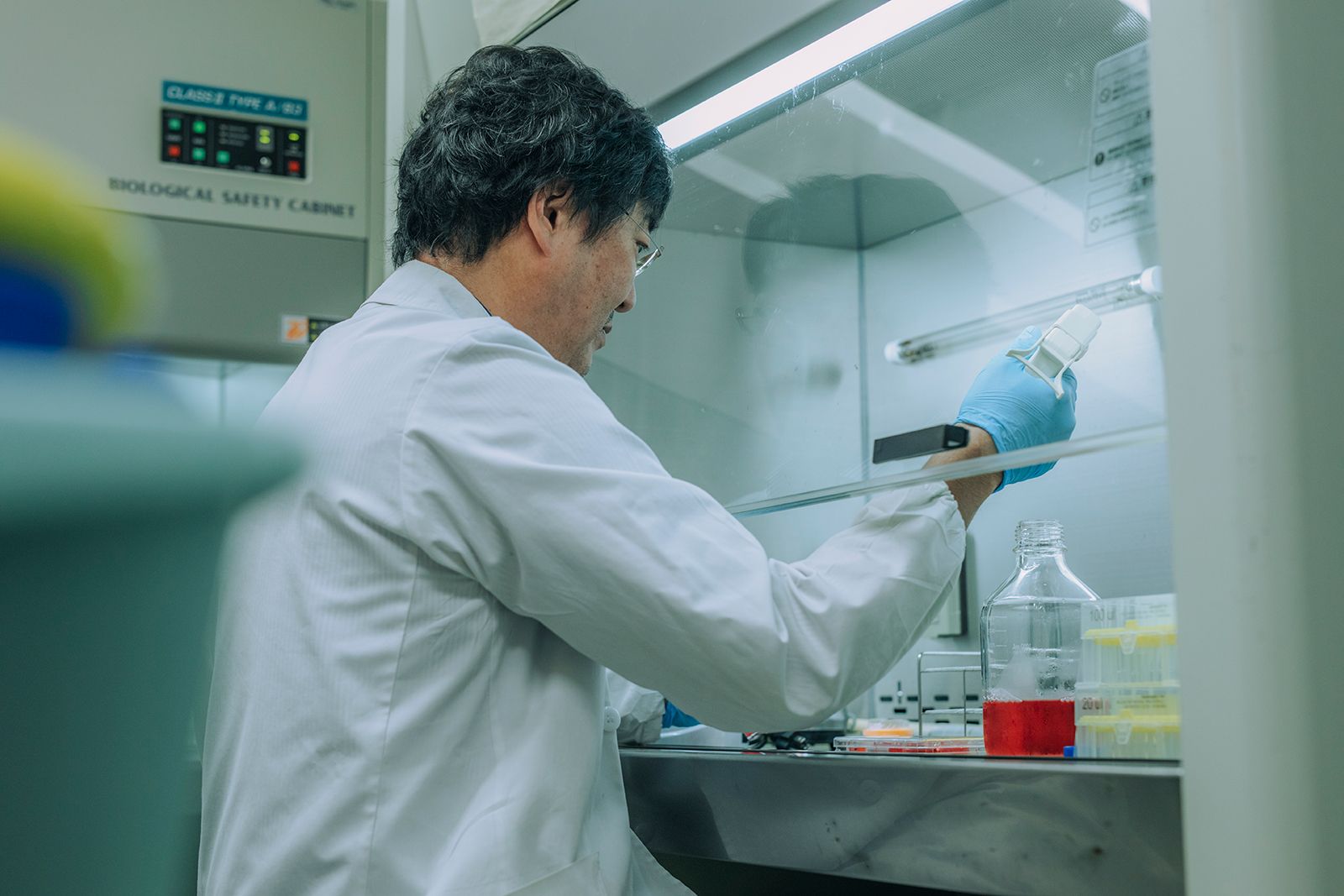
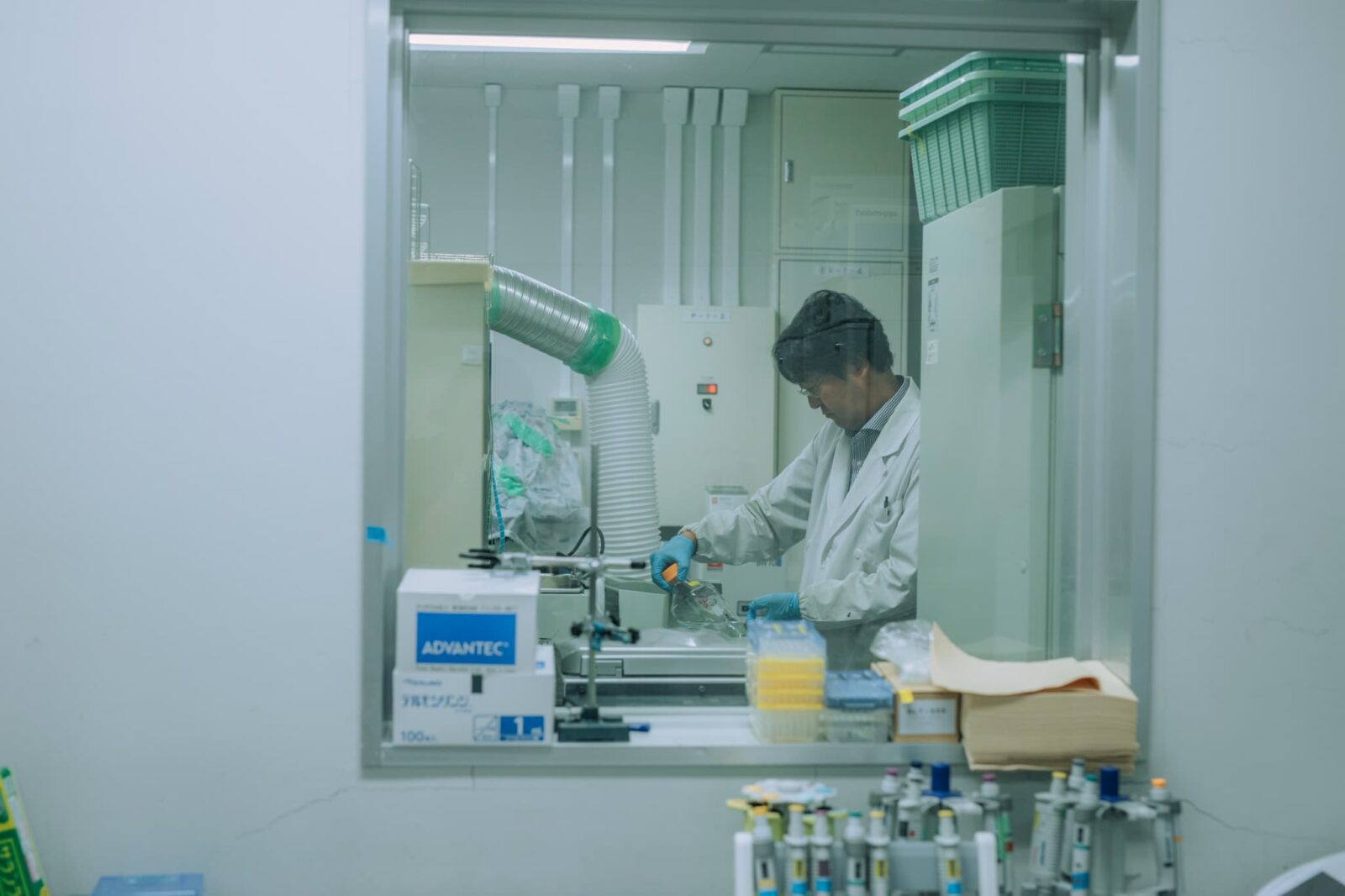
Drinking water treatment is an essential safeguard for public health, and one of its most critical functions is the removal of viruses. How effectively viruses are eliminated can be investigated only in laboratory. The most reliable method involves taking concentration steps to prepare a sample, which is then applied to a layer of living host cells. If infectious viruses are present, they will infect the host cells and multiply, causing visible effects, such as cell damage or plaque formation. Such effects can be quantified, allowing researchers to estimate the amount of infectious virus in the sample before and after treatment. However, the approach has serious limitations.
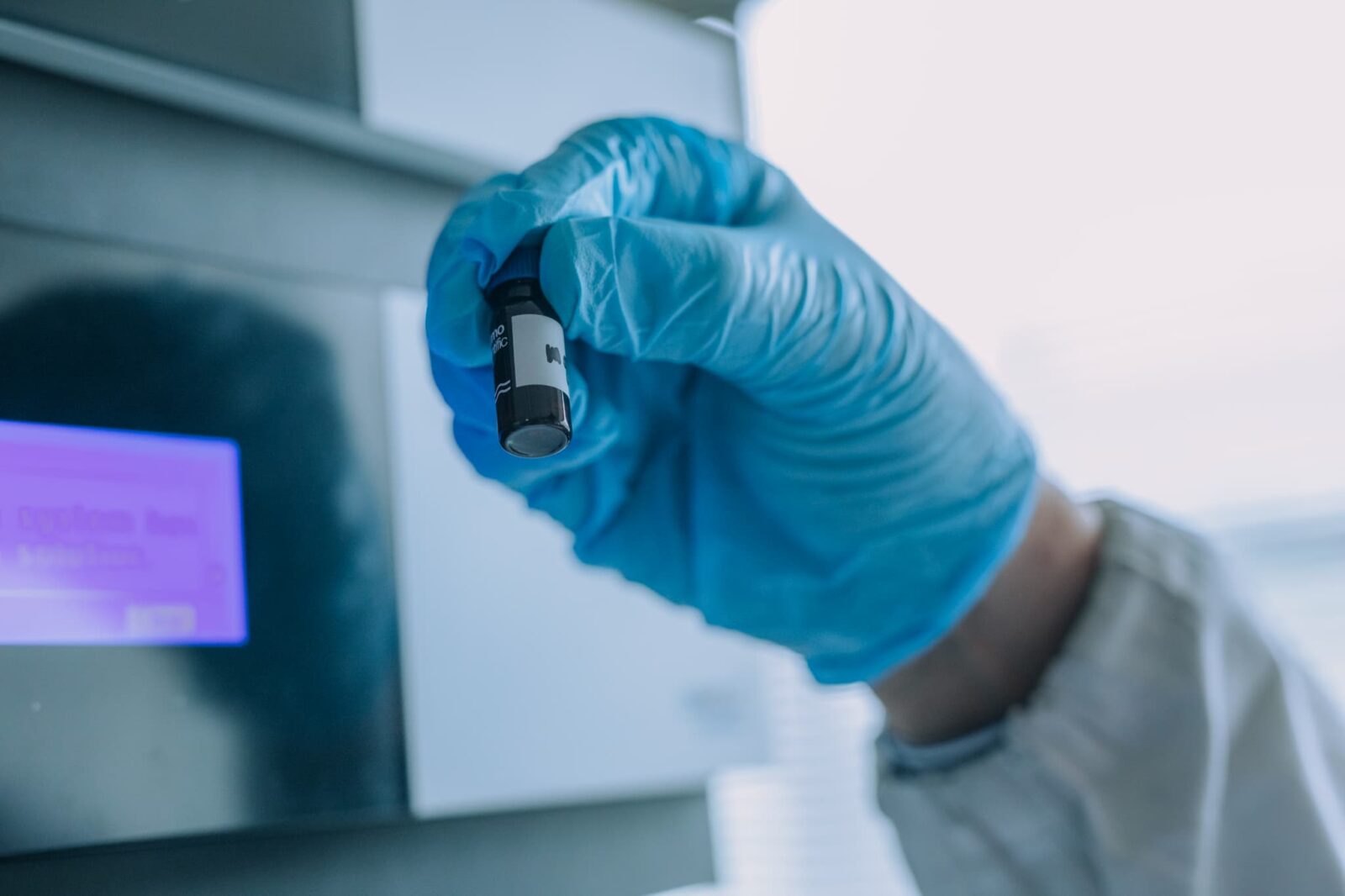
“For reasons still not fully understood, norovirus cannot be cultured in laboratory,” explains Professor Matsushita. “As a result, researchers around the world have been unable to evaluate how effectively water treatment systems remove it using the standard methods”. To overcome the challenges and limitations of virus culturing, his laboratory adopted a strategy inspired by medical research: producing virus-like particles (VLPs). These particles structurally mimic real viruses by replicating their outer capsid proteins but contain no genetic material, making them non-infectious and safe for laboratory use. VLPs are already widely used in vaccine development and biomedical studies.
The team analyzed the amino acid sequence of the norovirus capsid protein and used recombinant gene technology to generate large quantities of norovirus VLPs in silkworms. To estimate the removal of these surrogate particles in water treatment experiments, the researchers employed ELISA, a widely used method in virology and environmental science that detects viral proteins (antigens) through their reaction with specific antibodies. These antibodies were produced by immunizing mice and rats with norovirus VLPs. To improve sensitivity, the team was first to adopt immuno-PCR (iPCR), a hybrid technique that links the antigen-antibody detection of ELISA with the amplification capabilities of PCR, for water treatment research.
While this worked with the conventional treatment methods (coagulation, sedimentation, and sand filtration), even iPCR lacked the sensitivity needed to detect the extremely low concentrations of VLPs that would remain after modern water treatment such as application of membranes. To get measurable results, the researchers were forced to intentionally increase the concentration of VLPs in the test water to levels tens of thousands of times higher than those expected in real-world scenarios. The team was left puzzled over this discrepancy.
A breakthrough by integrating insights from gene therapy
“It was clear that we needed a better way to detect VLPs to approach the levels found in real treatment plant,” says Professor Matsushita. Standard PCR test could offer improved sensitivity but couldn’t be applied to VPLs since they lacked necessary for amplification fragments of DNA or RNA.
At this point, Professor Matsushita and his team had to shift their perspective again. Drawing inspiration from gene therapy techniques in the medical field, they focused on a technology known as viral vectors: viruses or VLPs are used as carriers to deliver therapeutic DNA or RNA directly to cancer cells and other targeted tissues. “We realized that if we could encapsulate DNA fragments inside norovirus VLPs, we could use standard PCR to quantify them. This wouldn’t require complex new procedures and could dramatically improve detection sensitivity.”
Although their method for DNA encapsulation is still being refined, the team has already identified supplementary strategies to enhance sensitivity, such as incorporating multiple DNA fragments per VLP. “Right now, we’re focused on norovirus,” explains Matsushita. “But once a reliable method for encapsulating DNA fragments into VLPs is established, we’ll be able to safely test the removal efficiency of even highly dangerous viruses. Because we’re using only partial DNA fragments, not full viral genomes, there would be no risk of infection”.
He also envisions the potential for this technology to be “reimported” into clinical medicine, where it could be adapted for broader therapeutic applications.
The birthplace of sanitary engineering in Japan
The front page of Japan Waterworks News (Issue No. 123, published November 1, 1956, by Japan Waterworks Newspaper Co., Ltd.) announced a historic milestone:
“First department of sanitary engineering, Ministry of Education approves establishment at Hokkaido University.”
Japan’s postwar period of rapid economic growth brought not only prosperity but also serious environmental challenges. By the 1950s, pollution had begun to emerge as a serious national concern. Recognizing the urgent need for technical expertise to safeguard public health and the environment, the government acknowledged the critical role of what was then called sanitary engineering and now more broadly referred to as environmental engineering.
It was in this context, and thanks to the dedication of forward-thinking researchers, that Hokkaido University became the first institution in Japan to establish a Department of Sanitary Engineering. This pioneering step positioned the university as a national leader in water research and public health engineering, a reputation it continues to uphold today.
This legacy lives on in new generations of students, who approach water-related challenges with a clear sense of mission. “The role of engineering research is to offer practical solutions to the problems we face today, as well as to those we are likely to encounter in the future,” explains Professor Matsushita his laboratory’s forward-looking ethos.

Faculty of Engineering, Division of Environmental Engineering
Professor Taku Matsushita