
Solid-phase fluorescence excitation-emission matrix spectroscopy of soil, fulvic acid fractions, and clay mineral complexes: Evidence from red shift of fluorescence maxima associated with aggregation
Yuki Nakaya, Takashi Hirose, Ryuichi Tamori, Nobuhide Fujitake, Satoru Nakashima, Hiroshi Yamamura, and Hisashi Satoh
Non-destructive and non-extractive analysis of solid natural samples using fluorescence signals
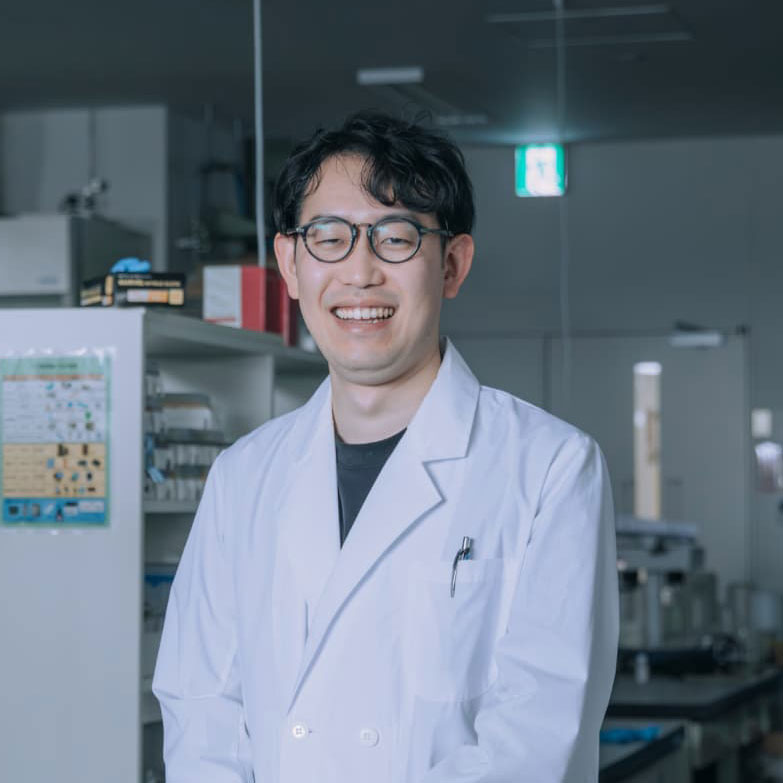
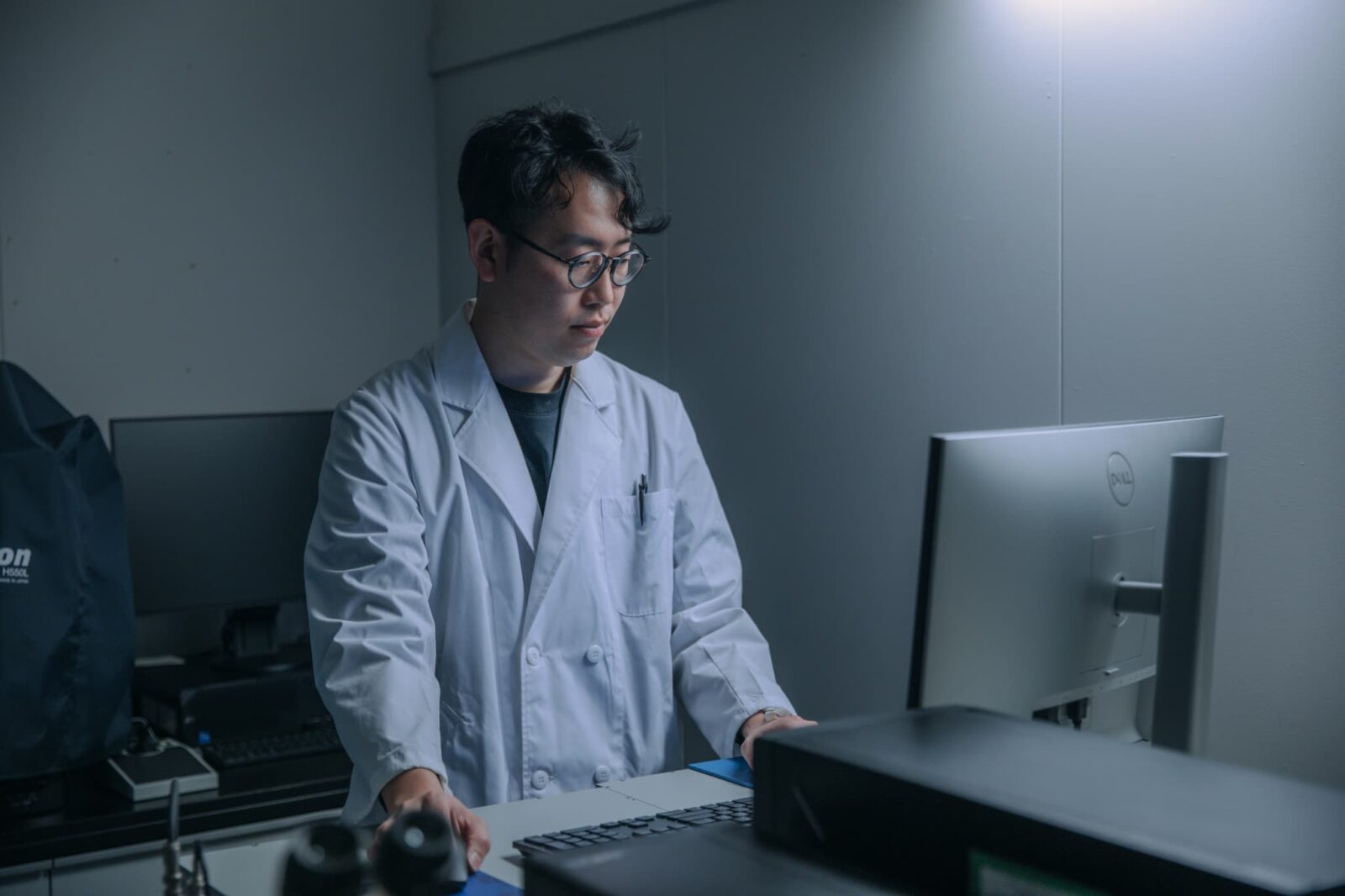
Advances in measurement and analysis form the backbone of engineering research. Assistant Professor Yuki Nakaya of the Aquatic Environmental Protection Engineering Laboratory has been making full use of fluorescence measurement instruments developed by a Japanese manufacturer since his graduate student days. By transferring technology across domains, he is now pioneering the investigation of solid-phase excitation–emission matrix (SPF-EEM) spectroscopy for solid samples analysis, contributing to the development of non-destructive and non-extractive methods for analyzing soil. “Every piece of data that emerges feels entirely new,” he says.
Soil analysis without chemical separation
The end products of organic matter degradation in marine, freshwater, and soil environments, known as humic substances, play important roles in ecosystem health, helping protect soils from erosion, supporting biodiversity, sustaining plant productivity, contributing to carbon storage, and influencing water quality. Despite their environmental importance, these substances cannot be described by unique chemical structures and are instead operationally defined by the analytical techniques used for their extraction and fractionation.
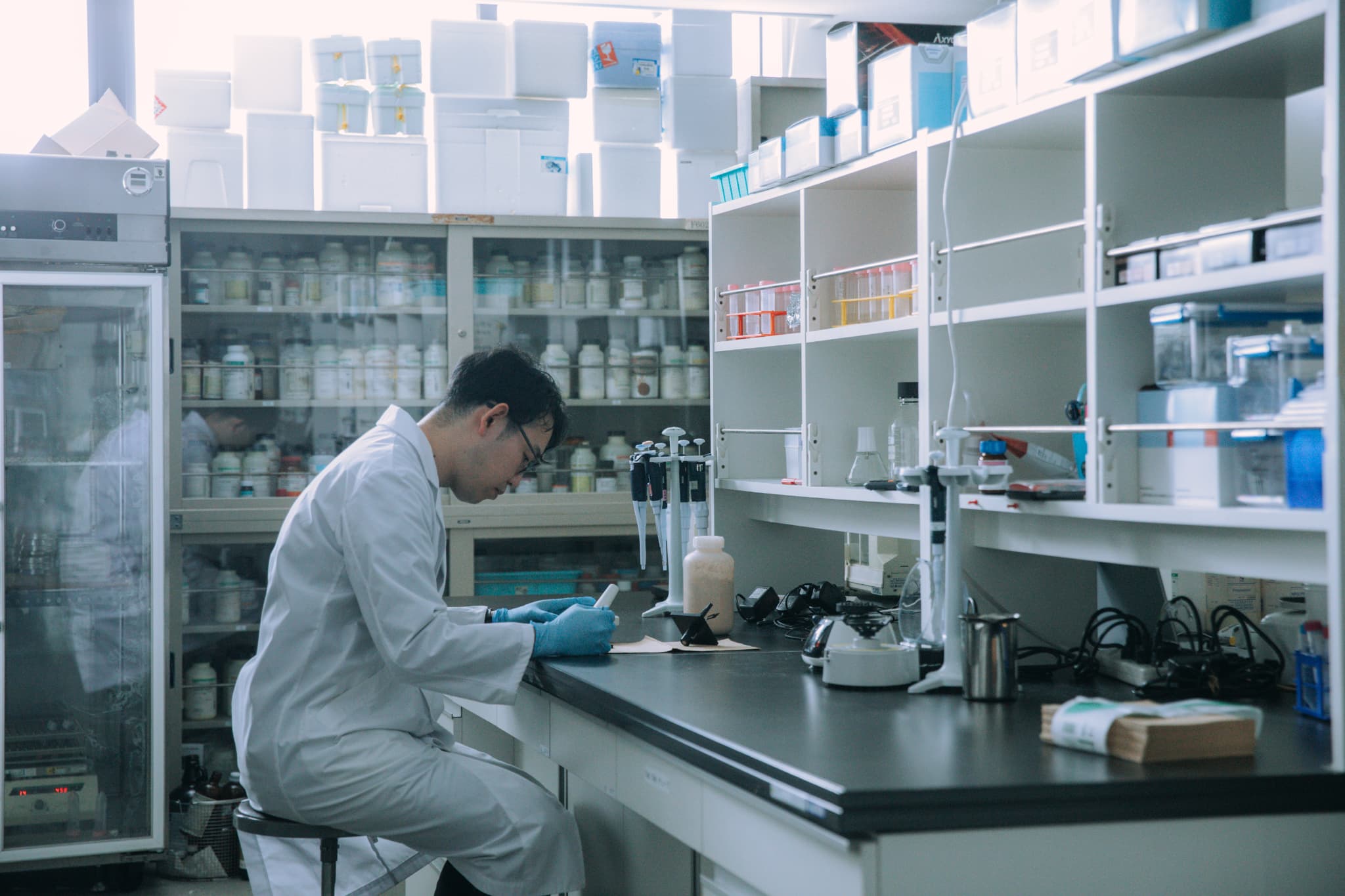
Typically, organic compounds are extracted from samples by using alkali solutions and resins. However, the validity of this extraction step itself has become the subject of significant debate in the scientific community in recent years.
Some researchers argue that subjecting soil to chemical extraction may alter its original composition and properties, and question whether the extracted components are sufficiently representative of the real conditions, such as the relationships between organic matter and minerals in the environment.
Unlike artificial materials made from uniform components, natural soils are inherently heterogeneous. This raises a fundamental question: how can researchers investigate soil in its natural complexity?
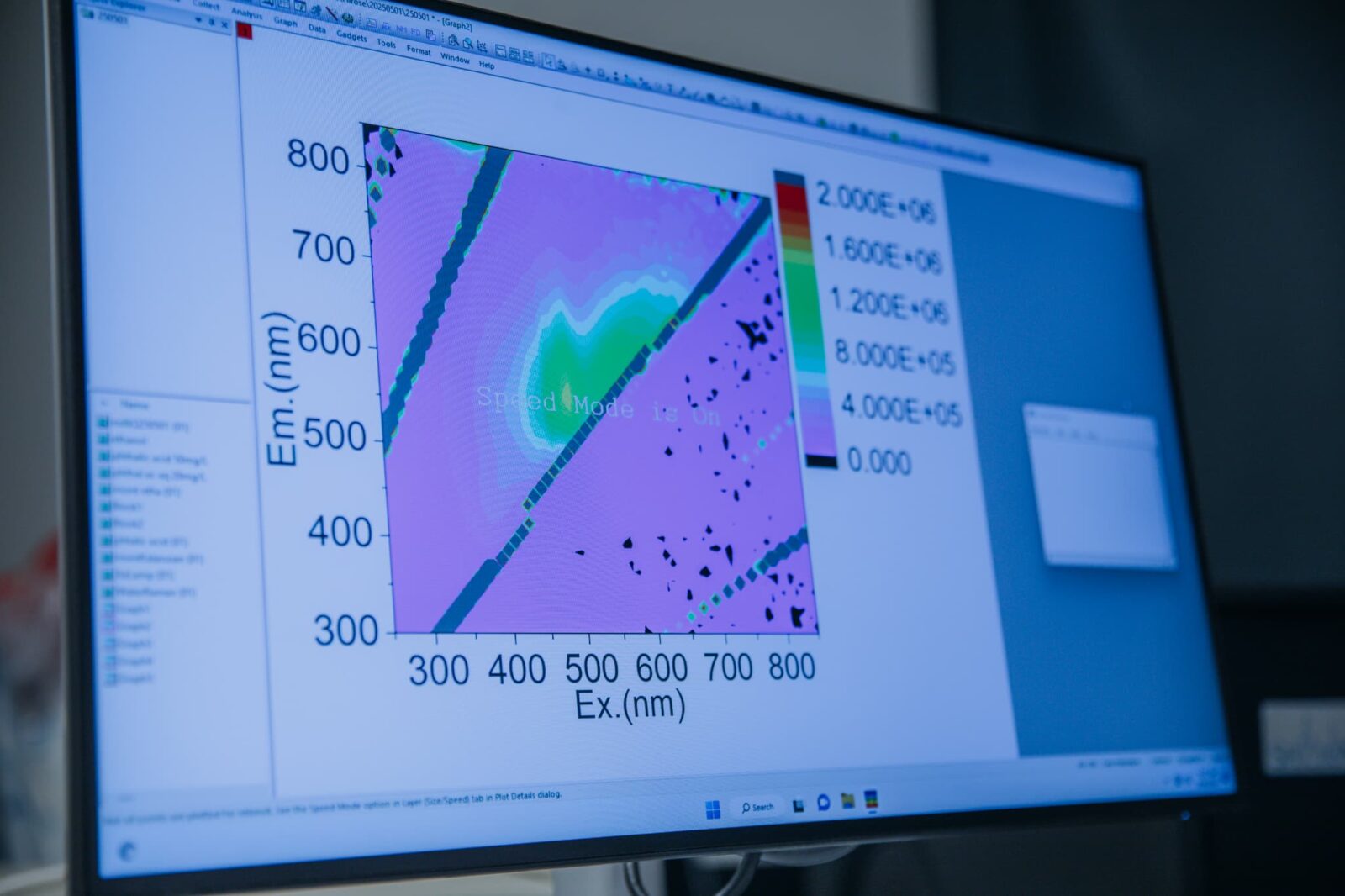
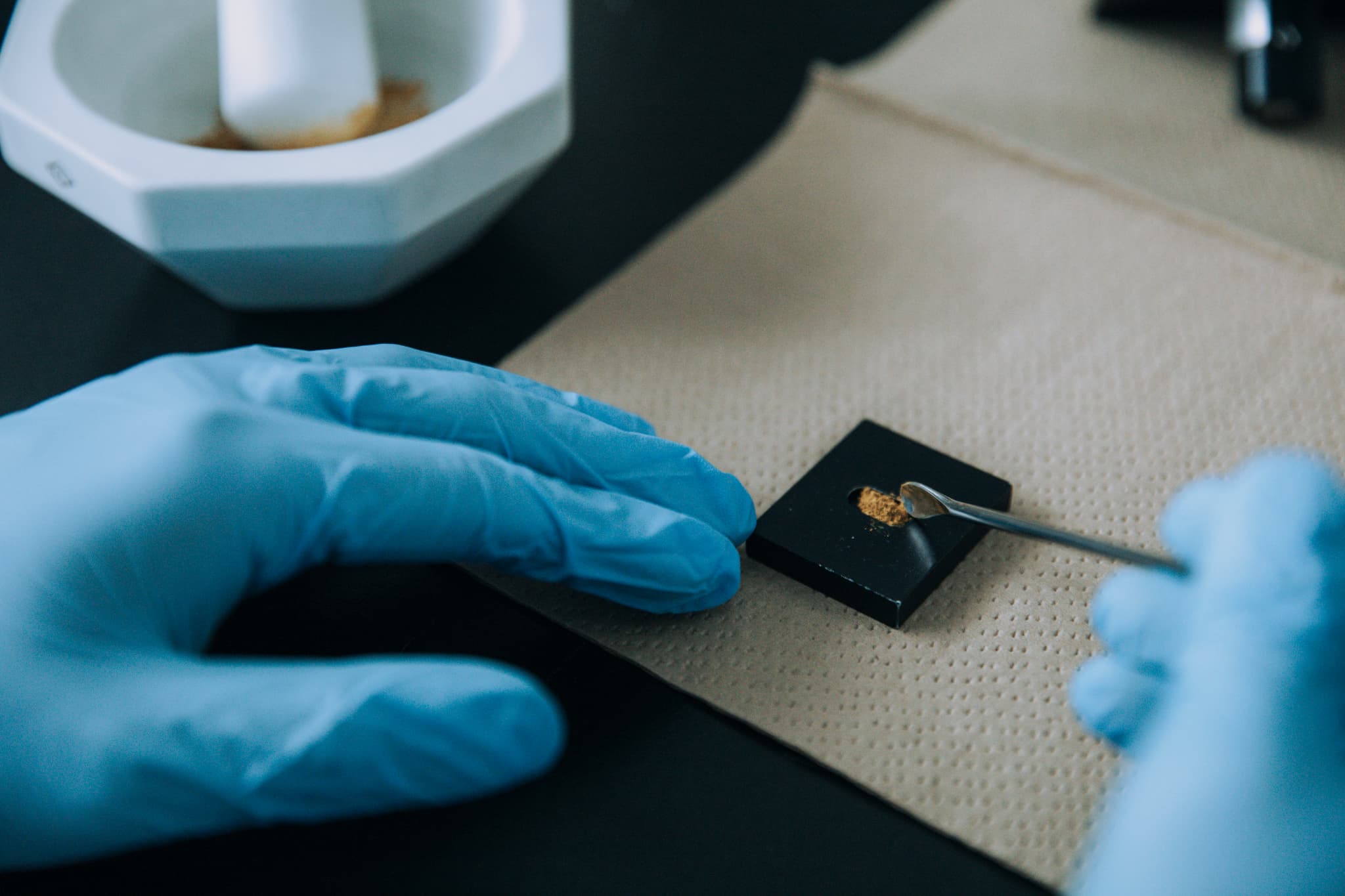
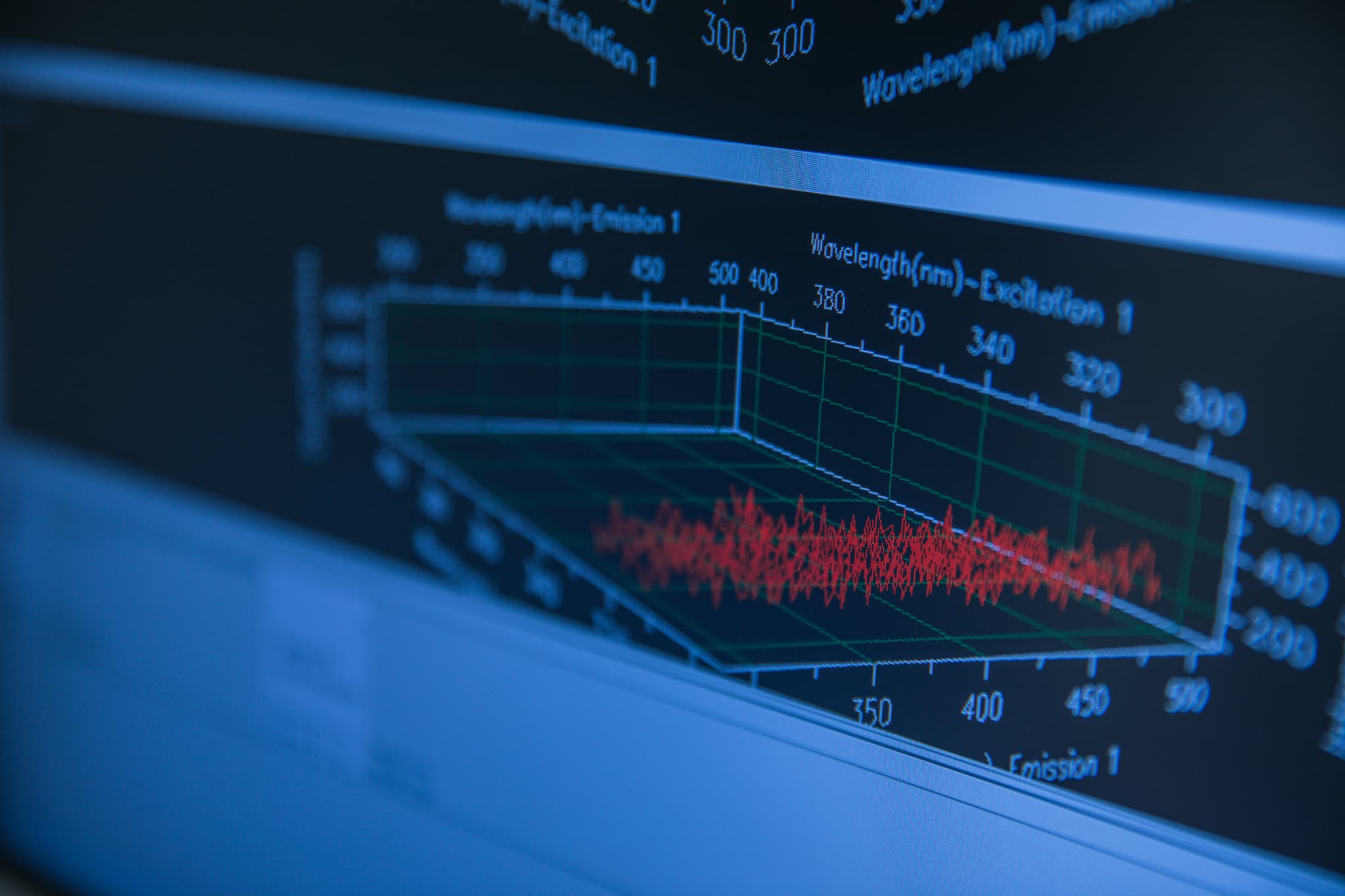
Assistant Professor Yuki Nakaya of the Aquatic Environmental Protection Engineering Laboratory is seeking to move the discussion forward by applying a non-destructive analytical method that uses fluorescent signals emitted directly from soil samples, known as solid-phase fluorescence excitation-emission matrix (SPF-EEM) spectroscopy.
Although solid-state nuclear magnetic resonance (NMR) spectroscopy is a well-established non-destructive technique, its application is limited because it requires extensive sample preparation and labor-intensive analysis. Conventional alkaline-solution based methods as well require very sophisticated and time demanding approach. SPF-EEM spectroscopy offers the advantage of requiring minimal pretreatment for soil analysis.
With little prior research conducted globally, Dr. Nakaya’s students are excited to work on the topic despite the extra effort required to chart unexplored territory: “Everything we try is novel, it makes the research fun.”
The next challenge is quantitative analysis. Collaborative research on meteorite analysis and water purification is also underway
Dr. Nakaya attributes the novelty of his approach to soil analysis to his readiness to “overcome bias” and availability of high precision equipment. His background is in geoscience and as a student and researcher at Osaka University, he studied humic substances that had accumulated on the bottoms of lakes and seas over hundreds or even thousands of years. Excitation-emission matrix (EEM) fluorescence spectroscopy is a standard analytical method typically applied to liquid samples.
“High-sensitivity fluorescence measurement equipment is widely used in fields such as medicine and semiconductor research, ” Dr. Nakaya explains. “But there have been very few attempts to apply it to ‘earth-colored’ samples. Because soil is dark, it tends to absorb light, so it is usually not considered suitable for fluorescence analysis.”
Because his laboratory was not focused on conventional soil extraction and analysis methods, when concerns about the validity of those methods were raised by soil scientists, Dr. Nakaya proposed to HORIBA, Ltd. (headquartered in Kyoto) to test a fluorescence analyzer they had developed on a soil sample collected from a nearby park. The experiment proved to be a turning point that ultimately led to his current research.
“What made this approach possible was the high performance of the instrument- not only its sensitivity, but also its ability to effectively eliminate unwanted signals such as scattered light,” he says.
Together with colleagues in soil science and geology he is investigating how organic matter in soil emits fluorescence under different conditions. At this stage, they have found that the wavelength (color) of light emitted from the samples varies depending on the state of the organic components. For example, differences appear when the organic matter is dispersed in aqueous solution, when the solution is dried and only organic powder remains, and when the organic matter forms complexes with clay minerals that simulate soil conditions.
While many challenges remain before the method can achieve the level of quantitative analysis already established for liquid fluorescence techniques, Dr. Nakaya and his team are working on examining qualitative data that will serve as a foundation for future research.
The non-destructive analytical approach using fluorescence signals has attracted considerable interest from researchers, and Dr. Nakaya is currently involved in several collaborative projects.
“Humic substances may be strongly associated with soil organic matter and geochemistry, but the analytical techniques cut across wide a range of disciplines,” explains Dr. Nakaya, “as far as the analysis of meteorites”. There is a high demand for new non-destructive analytical methods in cosmochemistry. Their objects of study are rare samples that may hold clues to the origins of the universe. The material brought back from space, such as samples brought from the asteroid Ryugu must be divided between researchers; a small portion was also delivered to Hokkaido University for analysis.
“I approached Associate Professor Yoko Kebukawa of the Institute of Science Tokyo, who specializes in the analysis of organic matter in meteorites, and colleagues at other universities and they immediately showed interest,” Dr. Nakaya says.
The method may also prove useful in “down to our daily life” area – water purification. “Filtration membranes used in water purification plants get clogged with organic matter and need to be cleaned periodically. We would like to detect the optimal timing for cleaning before the membrane becomes clogged. Just cleaning it more often may sound like a solution, but the cost of the chemicals is high. We could determine the best timing for cleaning by continuously monitoring fluorescence signals from the membrane and detecting subtle changes.”
Paying attention to the needs of industry. Selected for the startup program
Assistant Professor Nakaya brings a new perspective to the Aquatic Environmental Protection Engineering Laboratory. “Our laboratory deals with various aspects of water safety, including wastewater and drinking water,” he explains. “Professor Hisashi Satoh, whose research focuses on microorganisms, wanted to broaden the range of approaches by welcoming a specialist in organic matter like me.” Dr. Nakaya says he is working with enthusiasm to meet the expectations of Prof. Satoh.
Both Prof. Satoh and Assistant Professor Nakaya were individually selected as members of the 2025 Startup Program “GAP Fund,” an initiative under the Hokkaido Future Creation Startup Development Mutual Support Network (HSFC). Dr. Nakaya’s project focuses on developing a commissioned wastewater analysis service using EEM fluorescence fingerprinting to improve the efficiency of inspections of aging sewer pipes. This startup project applies the EEM technique in its more conventional form – for analyzing dissolved organic matter in liquid samples such as wastewater.
“I always listen to the real stories of wastewater treatment plant employees in Japan and to those I meet while visiting countries facing water safety challenges,” Dr. Nakaya says. “Every time I go into the field, I’m reminded of the importance and the challenge of putting the idea of ‘No one left behind’ into practice through accessible analytical technologies.”
Dr. Nakaya also points out that the corporate motto of HORIBA, Ltd., the manufacturer of the fluorescence spectrometers used in his research, is “Omoshiro Okashiku”, which is translated as “Joy and Fun.” Inspired by their playful spirit of creativity, he continues to pursue research that connects him with users around the world.
Faculty of Engineering, Division of Environmental Engineering
Assistant Professor Yuki Nakaya