
Development of hydrogen production technology using plasma-assisted water electrolysis
Grant-in-Aid for Challenging Research (Pioneering) 2025.6.27~2029.3.31
Toward a “Hydrogen Society: Plasma-Driven Electrolysis as a Novel Method for “Green” Hydrogen
Amid the accelerating global shift toward a decarbonized society, “green” hydrogen production through water electrolysis is gaining increasing attention. Associate Professor Naoki Shirai has proposed a plasma-driven electrolysis method that enables stable plasma generation in water under atmospheric pressure using direct electric current. He is currently investigating the mechanisms underlying hydrogen production at both the cathode and the anode. His research aims to clarify how hydrogen production can exceed a Faradaic efficiency of 1 and to lay the foundation for the future development of highly efficient hydrogen production technologies.
Leveraging the advances of water-plasma interaction under atmospheric-pressure research for hydrogen production
Emitting no CO₂, hydrogen is widely regarded as a key energy carrier for decarbonizing sectors that are difficult to electrify, such as heavy industry, shipping, and aviation. In Japan, ambitious plans to build a “hydrogen society” where hydrogen is a significant source of energy by 2050 are underway. Investments in hydrogen research and commercialization aim towards carbon neutrality and national energy security.
While the dominant industrial source of hydrogen is “grey” hydrogen, produced primarily from natural gas (methane) and emitting large amounts of carbon dioxide, reducing those emissions through carbon capture and storage (CCS) leads to “blue hydrogen”. More costly but promising alternative is “green hydrogen,” that can be generated without carbon emissions and when powered by renewable energy sources such as solar and wind lead to very low carbon footprint.
“There are few methods to generate “green” hydrogen through electrolysis with only oxygen released as a by-product already at industrial or pilot stages,” says associate professor Naoki Shirai, “but they have limitations” In the 4-years Challenging Research (Pioneering) project supported by Japanese Government Grants-in-Aid for Scientific Research (KAKENHI) program that recently took off associate prof Shirai and his team at the Plasma Processing for Environmental Technologies laboratory are using their knowledge of plasma generation in water to explore new method of hydrogen production.
“Challenging Research means that we are stepping into an unchartered territory, and no one can guarantee success,” adds Prof. Shirai, “but potentially it leads to a high impact. There are important fundamental principles that have not been yet explored our research aims to understand”
Traditionally plasma research has focused on low-pressure environments, but scientific advances in recent decades have enabled the generation of low-temperature (non-equilibrium) plasma at atmospheric pressure, unlocking new insights into plasma-water interactions and expanding its applications in fields such as medicine and agriculture.
“Simply put, when a high voltage is applied to water surface, plasma can form at the interface of a metal electrode and water. From plasma perspective water acts like a liquid electrode. This is called liquid electrode discharge. But if we immerse the electrode, we can change the perspective – plasma becomes the electrode, driving the dissociation of water molecules and production of hydrogen. This is the direction we are working on now,” explains Dr. Shirai.
The foundations of Dr. Shirai’s research project lie in the method for stable plasma generation in aqueous solutions that he independently developed based on the years of experience in plasma-water interaction research, as well as in a phenomenon reported in literature, but not yet fully understood, in which hydrogen production under plasma conditions is significantly higher than in conventional electrolysis.
Plasma is generated within bubbles, hydrogen and oxygen are released as gasses
Currently, “green hydrogen” production technologies through water electrolysis include Alkaline Water Electrolysis, Proton Exchange Membrane electrolysis that uses a solid polymer electrolyte, and Solid Oxide Electrolysis Cell electrolysis that uses solid ceramic electrolytes to generate high-temperature steam.
“Existing methods require specialized catalysts, high-cost materials and complex systems, often operating under demanding conditions. We aim to produce hydrogen using only water and plasma, and to achieve it by the simplest possible approach,” says Dr. Shirai.
In general, generating stable plasma discharge in water using direct electric current has been considered difficult, as due to the conductivity of water electric charge dissipates. To address this challenge, Dr. Shirai enclosed the metal electrode in a dielectric tube. “It is a simple discharge set-up that does not require injection of gas such as argon or helium, but no one has tried it before,” he explains, “it allows a bubble of air to form inside and below the tube, and the plasma is generated inside the bubble by direct current”
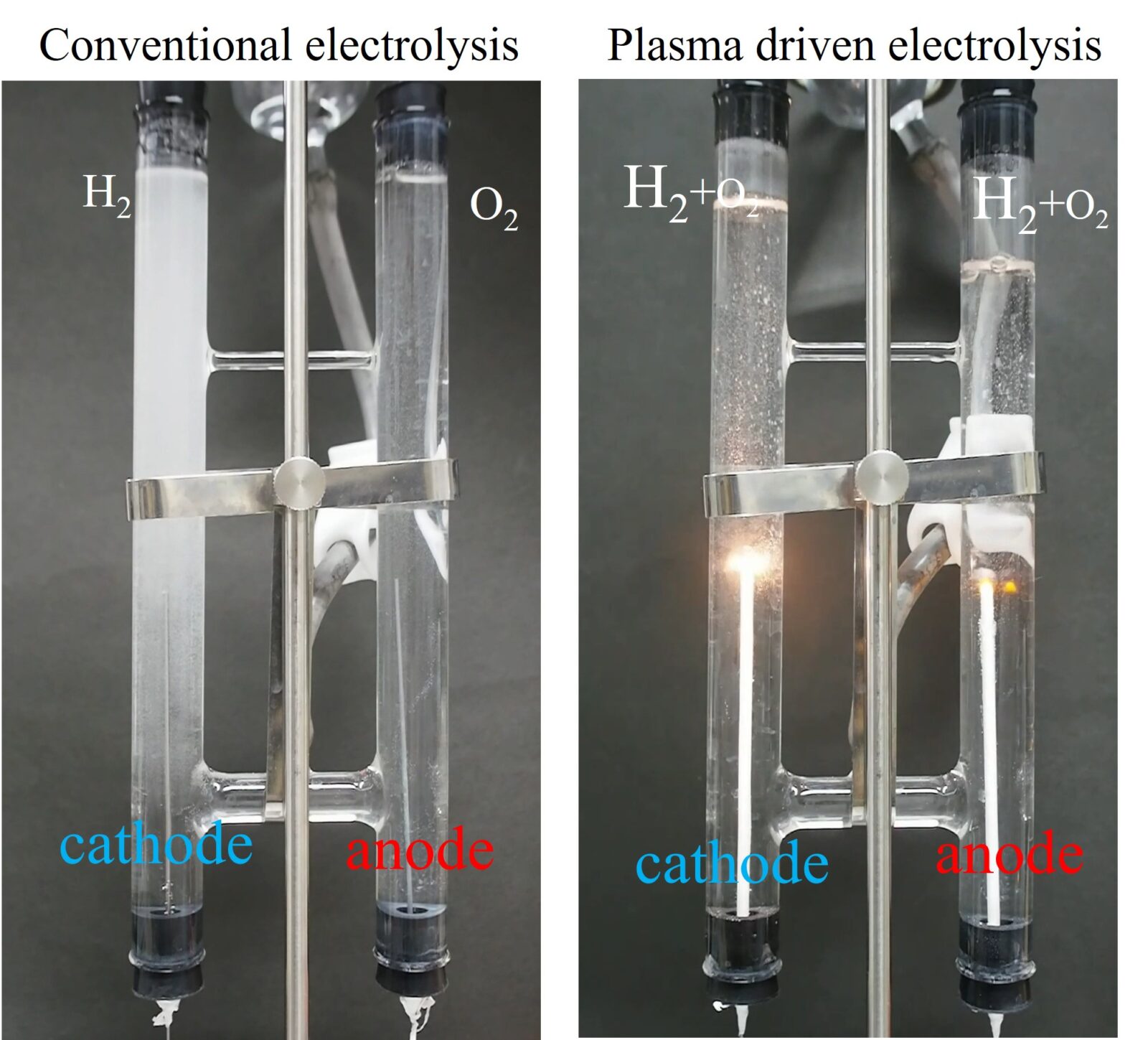
Analysis of the generated gases showed that, while conventional electrolysis produces hydrogen at the cathode and oxygen at the anode in a 2:1 ratio, plasma-driven electrolysis results in the simultaneous production of both hydrogen and oxygen at both electrodes. Notably, the total gas production at the anode exceeded that at the cathode.
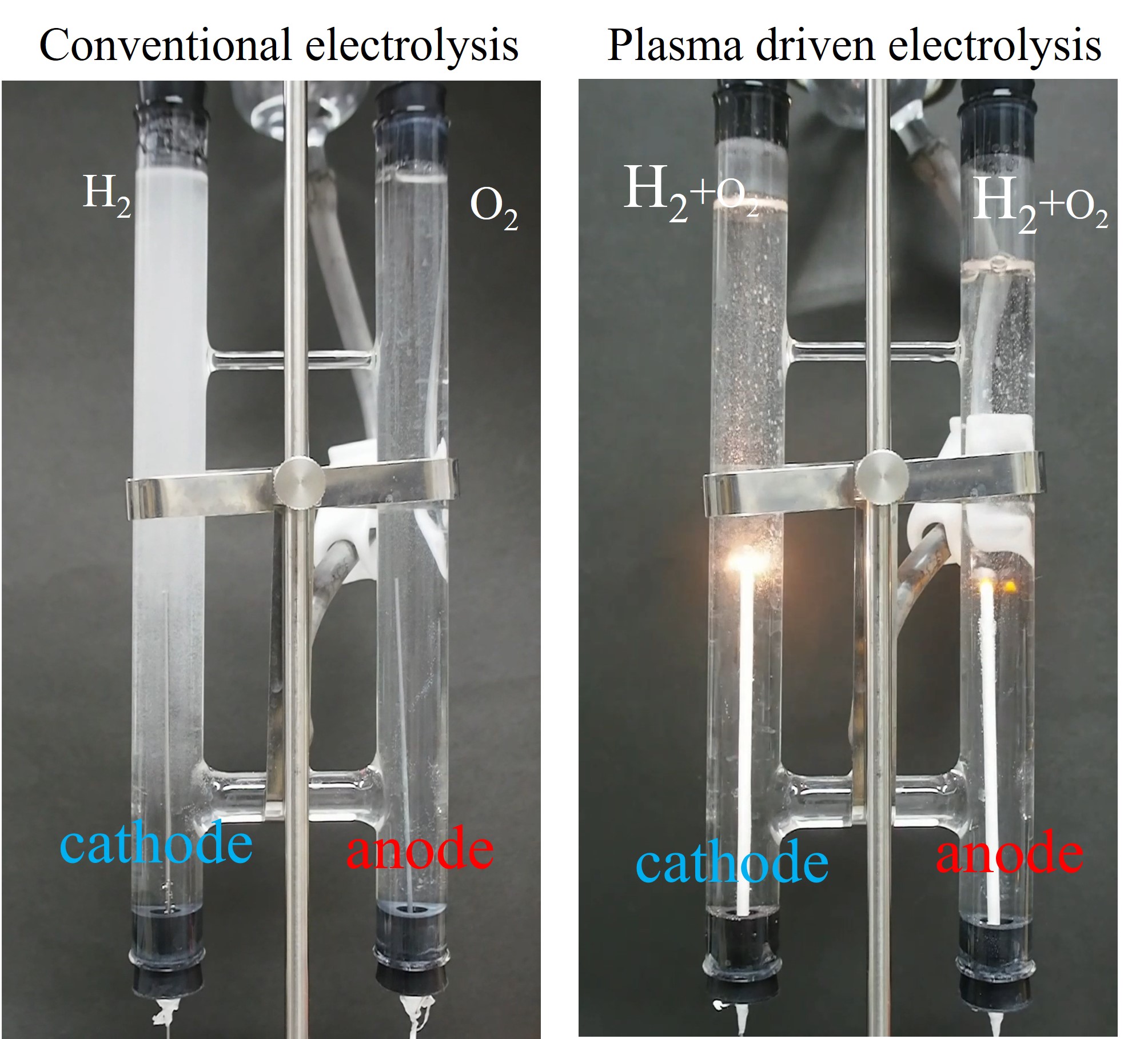
Similar results were observed in the “contact glow discharge electrolysis” experiments. An unusual for conventional electrolysis spontaneous electrochemical processes that occur when high voltage is passed through a smaller cathode in a liquid solution was first reported in the 1960s and termed as “contact glow discharge electrolysis”. Novel for conventional electrolysis generation of hydrazine from both liquid ammonia and hydrogen peroxide from diluted sulfuric acid has been observed and the amount of product exceeded the expected Faradaic efficiency of 1. The phenomena were later understood to involve plasma formation at the plasma–liquid interface, however the underlying mechanisms have not yet been sufficiently explained.
A similar result has been observed in Dr. Shirai’s discharge set up where hydrogen production also exceeds conventional expectations. The project will address the question of why the production yield increases by systematically examining various experimental conditions and investigating the phenomenon by incorporating insights from plasma science.
Reaction control and collaboration with electrochemistry and catalysis are future goals
“In the future, if we can control reaction yields, for example, by freely adjusting the ratio of hydrogen and oxygen produced, or combine hydrogen production with water treatment, we could fully leverage the advantages of plasma for hydrogen production,” says Dr. Shirai.
Since in plasma-driven electrolysis, the plasma itself acts as the electrode it eliminates electrode wear concerns and therefore enables application of the method to a wide variety of solutions beyond water. Dr. Shirai is discussing potential collaborations with researchers in electrochemistry and catalysis.
The ultimate goal is to move from fundamental research in the laboratory to real-world implementation. Dr. Shirai emphasizes that “this research is still at the fundamental stage, but everything begins with fundamental research.” By undertaking the “fundamental research that shall be conducted within the faculty of engineering for the real-world implementation to become possible,” the team aims to help open the way toward a next-generation “hydrogen society”.
As Dr. Shirai finishes his explanation, a slide featuring laboratory members and their families at an outdoor event appears on the screen. “In our laboratory, we place importance on work–life balance. Our families are an integral part of our research life,” he concludes.
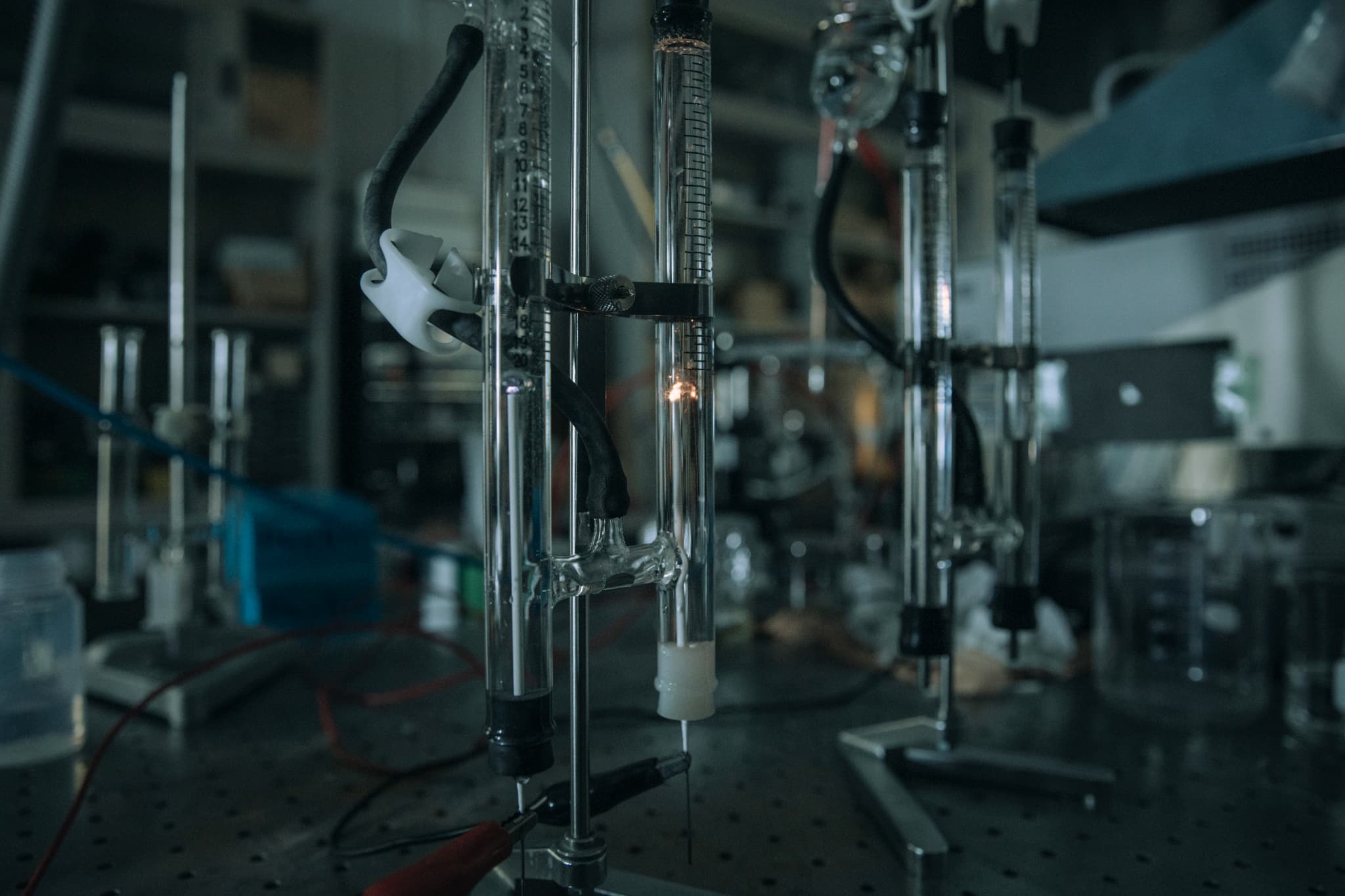
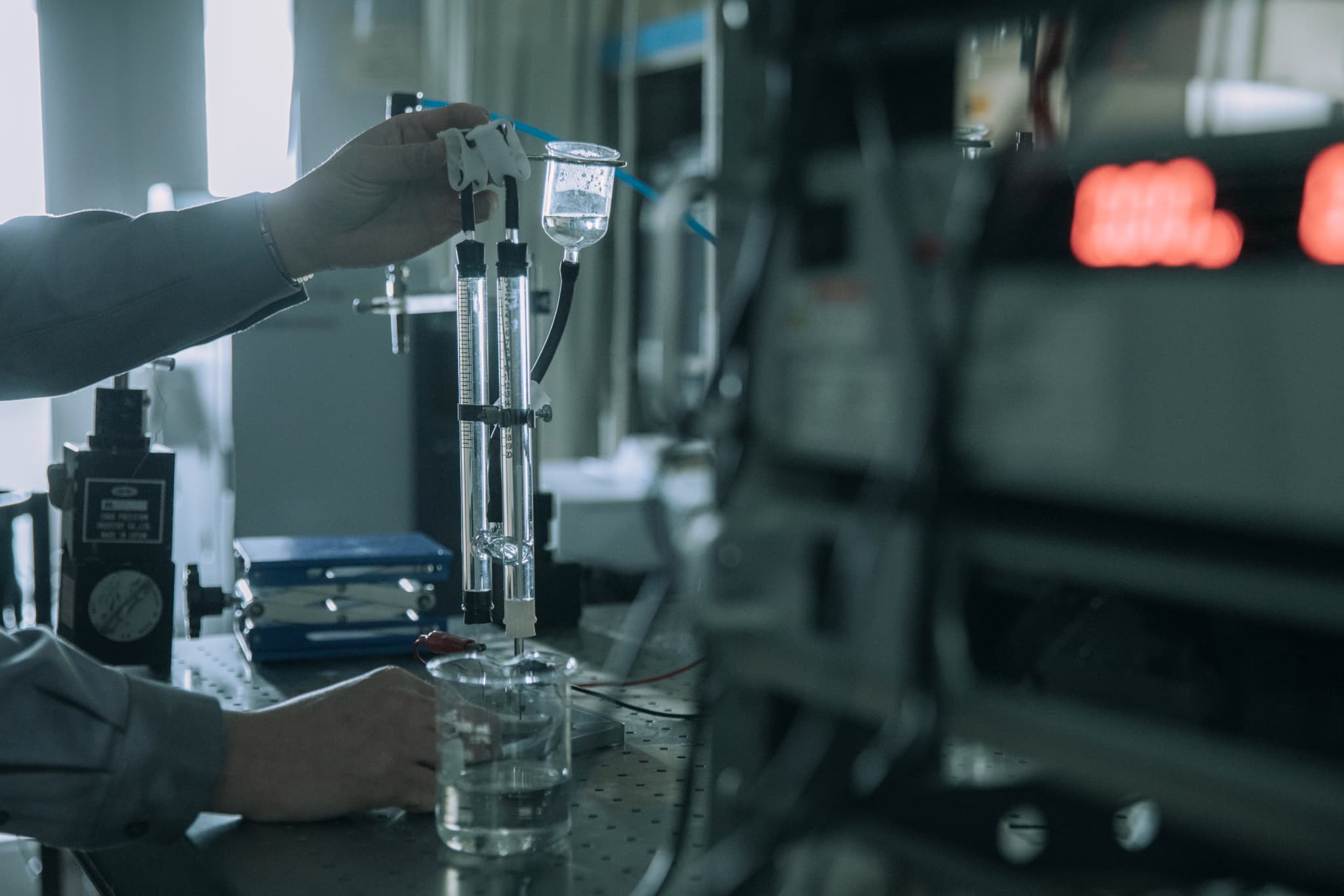
using a small container, but future plans include exploring parallel-driven large-scale systems.
Faculty of Engineering, Division of
Applied Quantum Science and Engineering
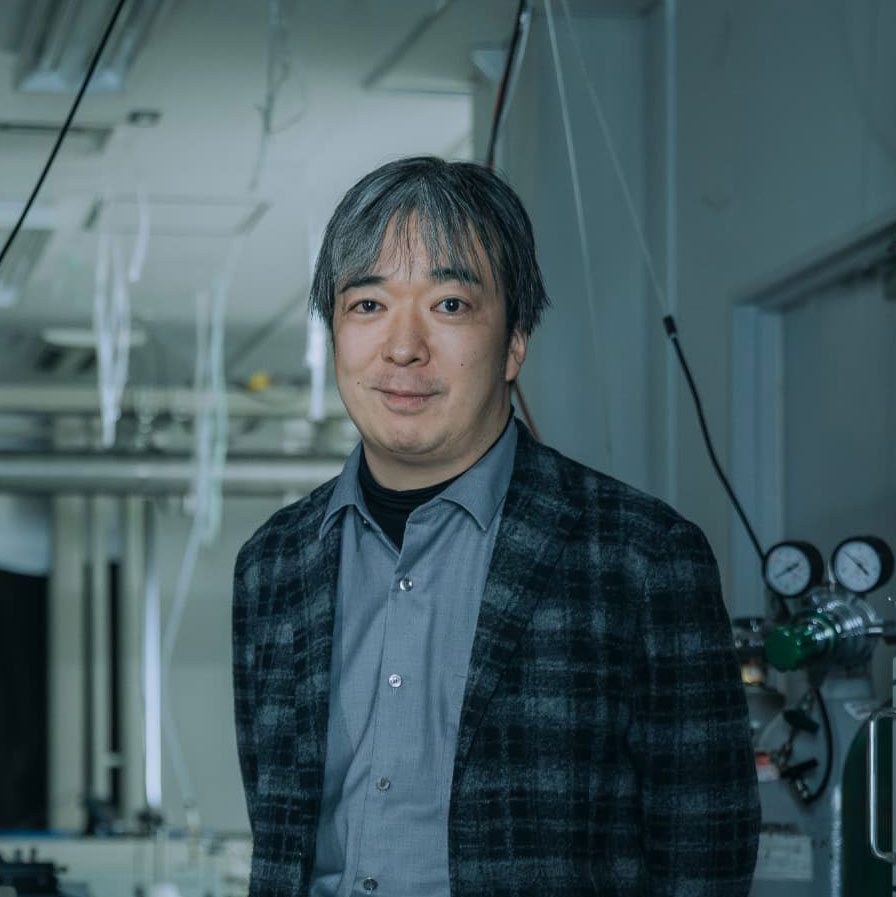
Associate Professor Naoki Shirai