

Dependence of superconducting and pseudogap quasiparticle dynamics on the number of CuO₂ planes in Bi-based cuprate superconductors
Taisei Shimizu, Tohru Kurosawa, Satoshi Tsuchiya, Yasunori Toda, Shigeyuki Ishida, Hiroshi Eisaki, and Migaku Oda
Probing the correlation between high-temperature superconductivity and the pseudogap with ultrafast time-resolved spectroscopy
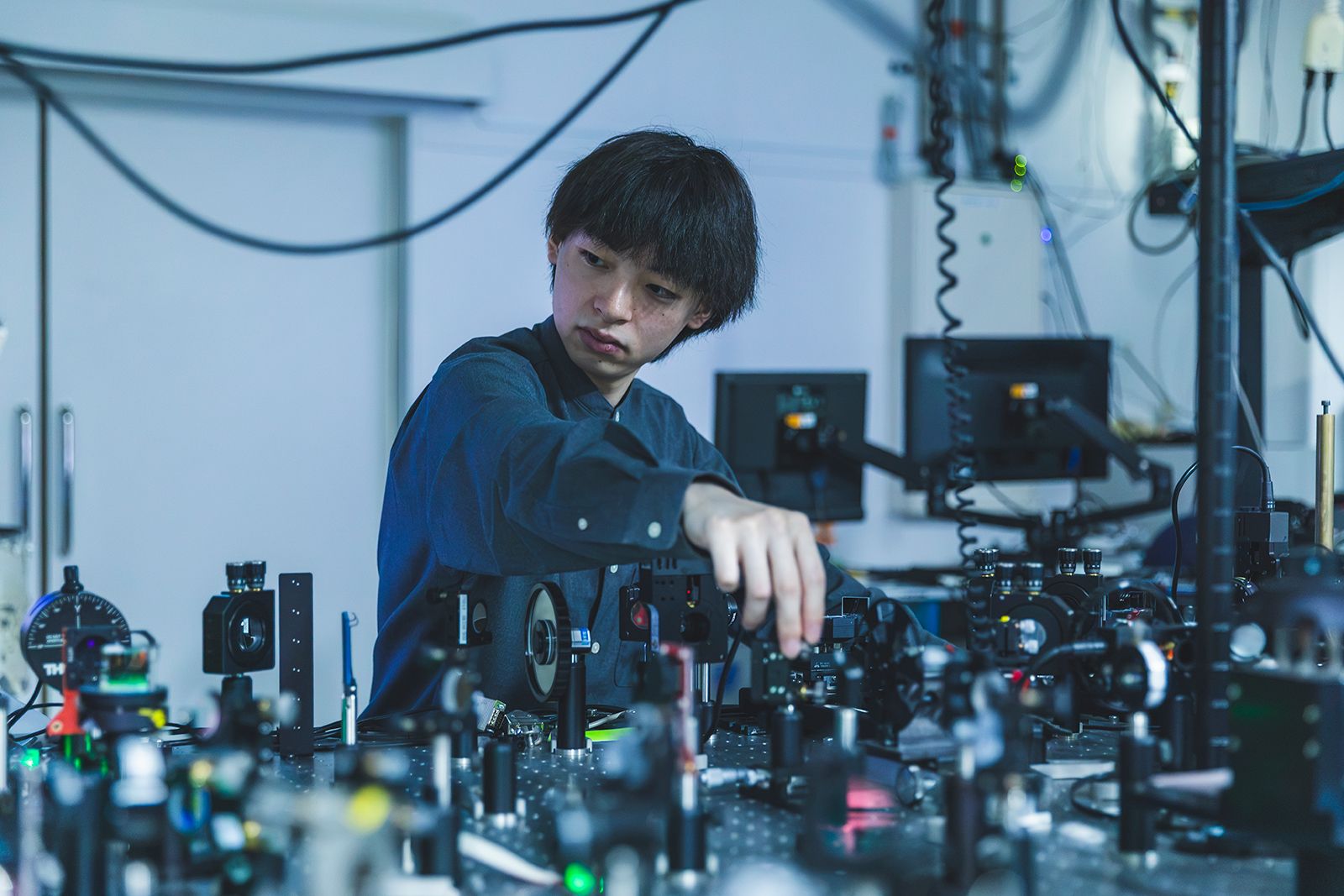
The discovery of cuprate superconductors in 1986 dramatically raised the record for superconducting transition temperatures, yet the mechanism behind high-temperature superconductivity remains unresolved. Taisei Shimizu, a second-year master’s student in the Laboratory of Optical Properties Engineering, used ultrafast time-resolved spectroscopy to simultaneously probe superconductivity and the pseudogap in multilayer cuprates. The results suggest a link between the maximum superconducting transition temperature and pseudogap, offering new insights into the mechanism of high-temperature superconductivity.
The search for the mechanisms behind high-temperature superconductivity
Superconductivity is a state in which a material’s electrical resistance drops to essentially zero and it exhibits distinctive magnetic properties. Ever since the phenomenon was first observed in mercury in 1911 at 4.2 K (−269°C), researchers kept looking for materials that remain superconducting at higher temperatures, making the phenomenon more practical to achieve and use. A major breakthrough came in 1986 with the discovery of cuprate, or copper oxide, superconductors that may superconduct above 77 K (−196°C), the boiling point of liquid nitrogen, a much cheaper and more readily available coolant than liquid helium.
Despite decades of research, however, the microscopic mechanism behind high-temperature superconductivity remains one of the major unresolved questions in condensed matter physics. Looking for clues to this mechanism, Taisei Shimizu from the Laboratory of Optical Properties Engineering studies multilayer cuprates, whose crystal structures contain multiple CuO₂ planes within each unit cell.
“The maximum transition temperature does not simply keep rising as the number of CuO₂ layers increases,” explains Shimizu. “In optimally doped cuprates, in other words, under the conditions where superconductivity is strongest, maximum transition temperature rises from single-layer to double-layer and reaches its peak in trilayer compounds, exceeding 100 K (−173°C), before dropping again in systems with four or more layers.” This behavior cannot be explained within the conventional Bardeen–Cooper–Schrieffer (BCS) theory of superconductivity, and several different mechanisms have been proposed to account for high-temperature superconductivity in cuprates.
While multilayer cuprates themselves remain largely the subject of fundamental and experimental research, understanding what enables trilayer cuprates to achieve unusually high transition temperatures could provide important clues for developing superconducting materials.
“With the explosive growth of generative AI, the rising energy demands of data centers are becoming a pressing societal problem, and I believe high-temperature superconductivity has a potential to solve it, “ says Shimizu. “Although our work explores superconductivity at the most fundamental, microscopic level, we hope it can bring us a step closer to meeting the challenge of room-temperature superconductivity and, ultimately, help pave the way for virtually loss-free energy infrastructure and ultra-energy-efficient devices.”
Systematic comparison of single-layer, double-layer and triple-layer cuprates using ultrafast pump-probe spectroscopy
The unusually high transition temperature of trilayer cuprates is partly explained through their distinctive structure: the inner plane and the two outer planes have different concentrations of charge carriers and different superconducting gap sizes. Another part of the puzzle is the “pseudogap,” an unusual electronic state that is neither superconducting nor insulating and is believed to be linked to the emergence of superconductivity. Researchers, however, continue to debate whether pseudogap suppresses superconductivity or, conversely, serves as a precursor to the superconducting state.
The Laboratory of Optical Properties Engineering, led by Professor Yasunori Toda, develops advanced spectroscopic techniques using light waves precisely controlled in space and time, and applies them to uncover new material properties and explore ways to control their functions. In his recent study, Shimizu used ultrafast pump-probe spectroscopy to probe the electronic behavior of multilayer cuprates and investigate how the pseudogap interacts with superconductivity.
“While similar measurements have been performed on single- and double-layer cuprates before, our study is the first to measure and directly compare single-, double-, and trilayer cuprates using the same experimental method,” says Shimizu.
“We used a spectroscopic technique that is sensitive to both, superconducting gap and pseudogap. This allowed us to succeed in detecting signals reflecting both the superconducting and pseudogap states in all of the samples with varying number of layers”.
The team was also the first to detect these signals in trilayer cuprates. “Compared to single- and bilayer cuprates, the trilayer system is thermodynamically less stable and exhibits slower crystal growth, meaning that growing high-quality single crystals requires advanced and precise control,” explains Shimizu. “The advances we made were possible thanks to our collaborators at the National Institute of Advanced Industrial Science and Technology (AIST), Principal Research Manager Hiroshi Nagasaki and Senior Researcher Shigeyuki Ishida who succeeded in growing the high-quality single crystals required for the experiment.”
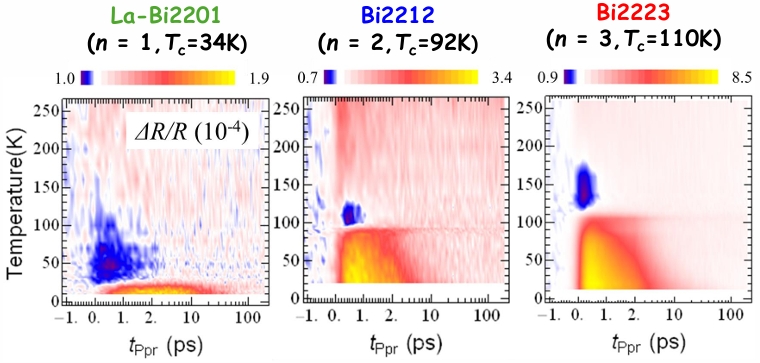
The measurements also revealed that correlation between transition temperature and pseudogap varies depending on the number of layers and higher transition temperature in trilayer cuprates is accompanied by a robust pseudogap, the one that it took roughly three times as much laser energy to suppress as in the single-layer and double-layer materials.
Does this correlation mean that pseudogap facilitates the emergence of superconductivity or otherwise is the next question the team is planning to explore.

From Wakayama to Sapporo, following a fascination with optical physics
At the time of the interview, Shimizu was still in the second year of his master’s program but had already reached the milestone of publishing his research in a journal and was planning to advance to a doctorate. “People with a physics background are in high demand in industry, and my colleagues from the laboratory and the Division of Applied Physics have a broad range of companies to choose from. I, however, have been interested in gaining a deeper understanding of the properties of materials since my undergraduate years. My supervisor and collaborators also treated me and engaged with me as a prospective researcher. Being in an environment at Hokkaido University where I can interact and discuss research with top-tier experts in optics and material synthesis is immensely inspiring, and this was one of the decisive factors that led me to pursue a doctorate.”
Shimizu graduated from a technical college in Wakayama and entered Hokkaido University as a third-year undergraduate. “Optics is itself an exciting field of research, but it is also an exciting and flexible measurement tool. Hokkaido University has a range of laboratories working in optical physics, but I didn’t hesitate when choosing Professor Toda’s laboratory. Using light to explore the electronic properties of materials is what fascinated me most.”
After completing his PhD, Shimizu hopes to “continue working in optics-related research and development” whether in industry or academic environment. For now, he is building the knowledge and analytical skills he will need as a researcher.

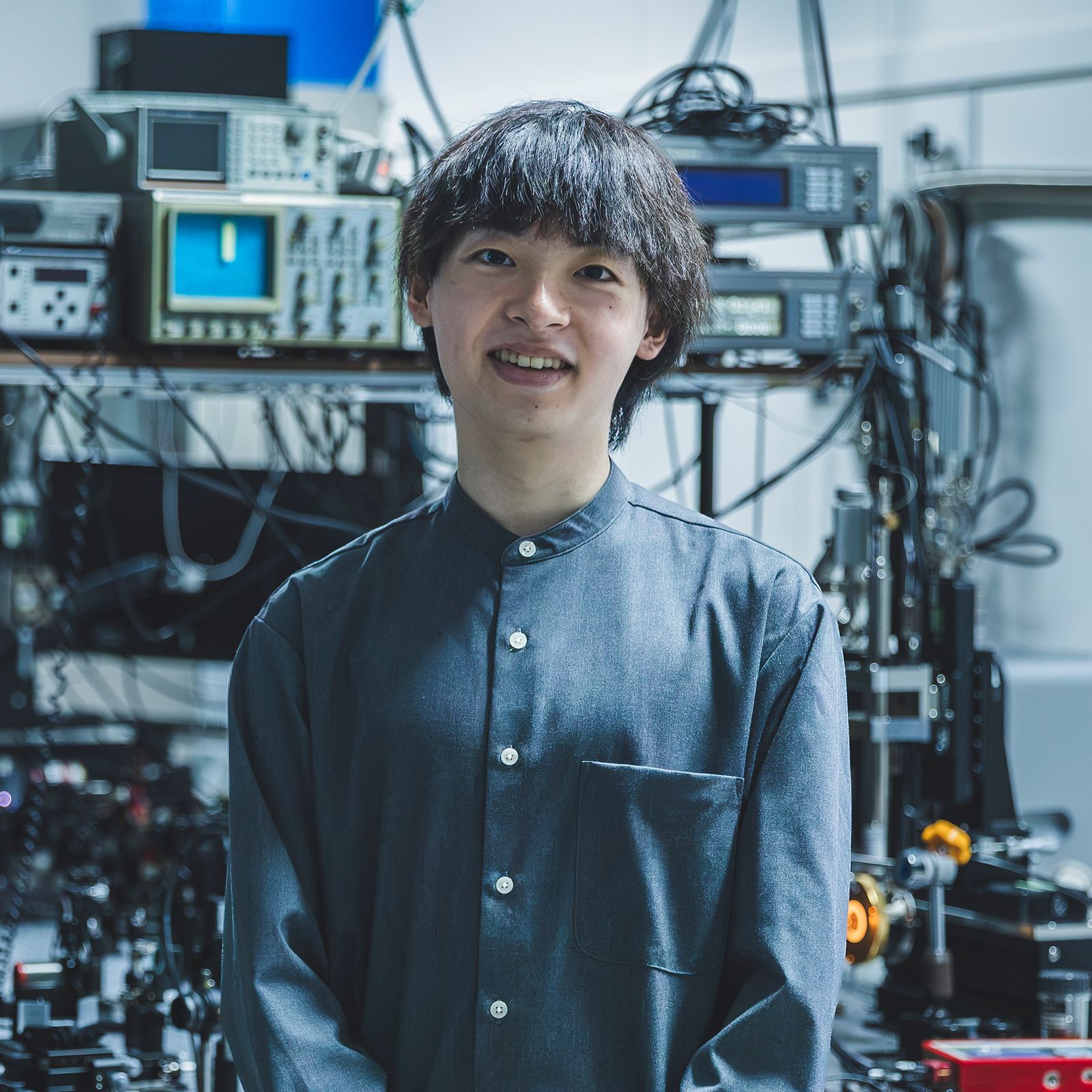
Taisei Shimizu
Division of Applied Physics
Graduate School of
Engineering