

Mechanism of Diffusion Flame Propagation along the Solid-Fuel/Liquid-Oxidizer Interface
Harunori Nagata, Masashi Wakita
Grant-in-Aid for Scientific Research(A) 2026.4.1~2031.3.31
Bringing an axial-injection end-burning hybrid rocket closer to practical liquid-oxygen operation
With a vision of safer, more accessible space development, Professor Harunori Nagata has spent almost three decades pursuing an unconventional axial-injection end-burning hybrid rocket (AIEB) design. As his team moved toward high-pressure operation with liquid oxygen, they encountered an unexpected phenomenon: flames propagating at high speed along the interface between the solid fuel and liquid oxidizer. Understanding how and why this happens is both a challenge on the path toward practical AIEB operation and a new question in combustion science.
Rethinking hybrid rocket design
Professor Harunori Nagata, the head of the Laboratory of the space system, is one of the key figures whose efforts have helped establish a strong association between Hokkaido and the space industry. Nagata’s motto, “I want to miniaturize space development,” and the launches of his small-scale CAMUI hybrid rockets since the early 2000s have captured public imagination. Advancing hybrid rocket design and making it a practical, competitive alternative to solid- and liquid-propellant rockets has been his life’s work.
Compared to solid rockets, hybrid rocket combustion can be stopped by shutting off the oxidizer supply in case of emergency; their fuel can be comparatively safe and inexpensive; and they can potentially offer simpler systems than liquid rockets. Yet despite nearly a century of development since the first designs appeared in the 1930s, hybrid rockets have struggled to generate sufficient thrust in compact engines and compete with established propulsion technologies.
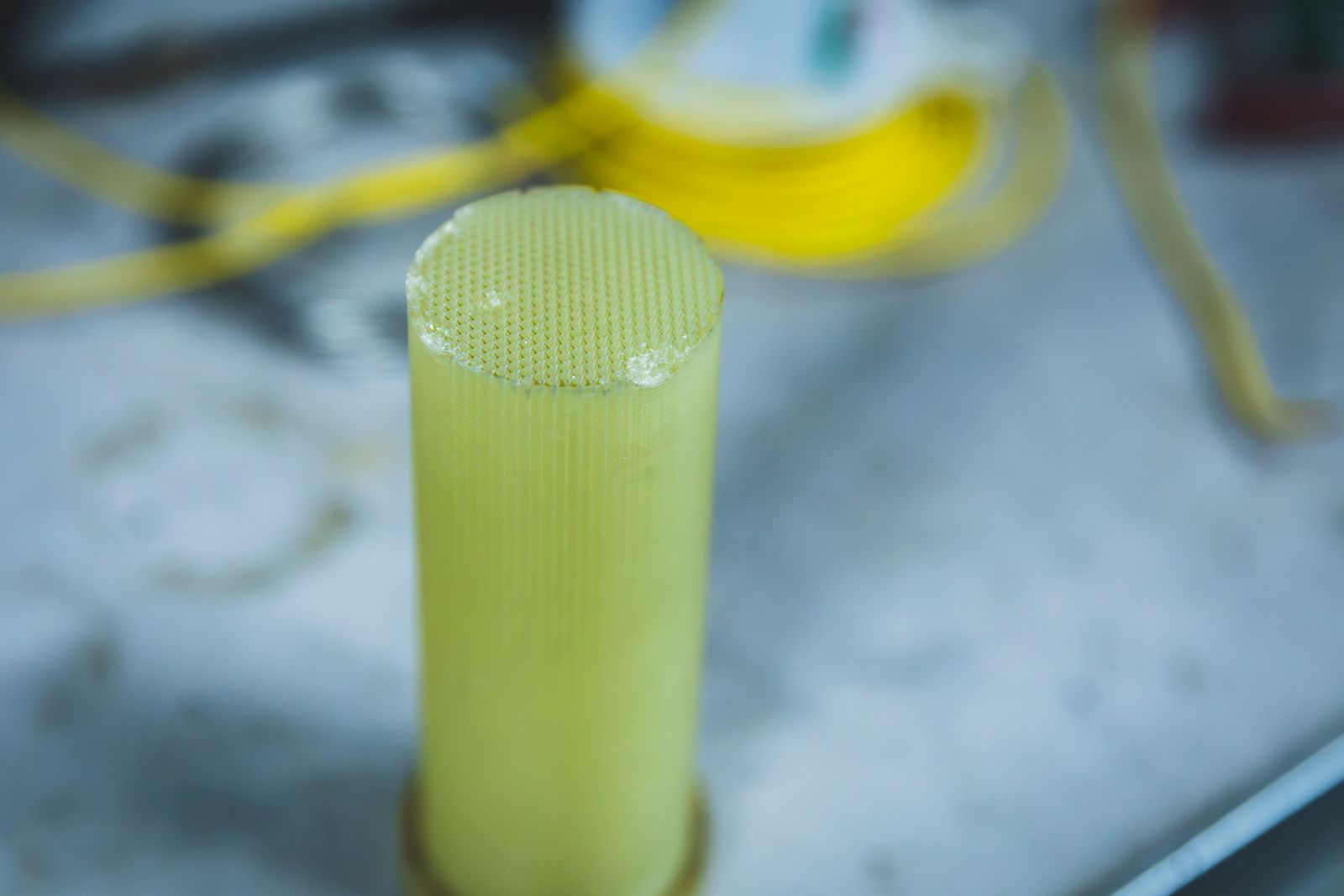
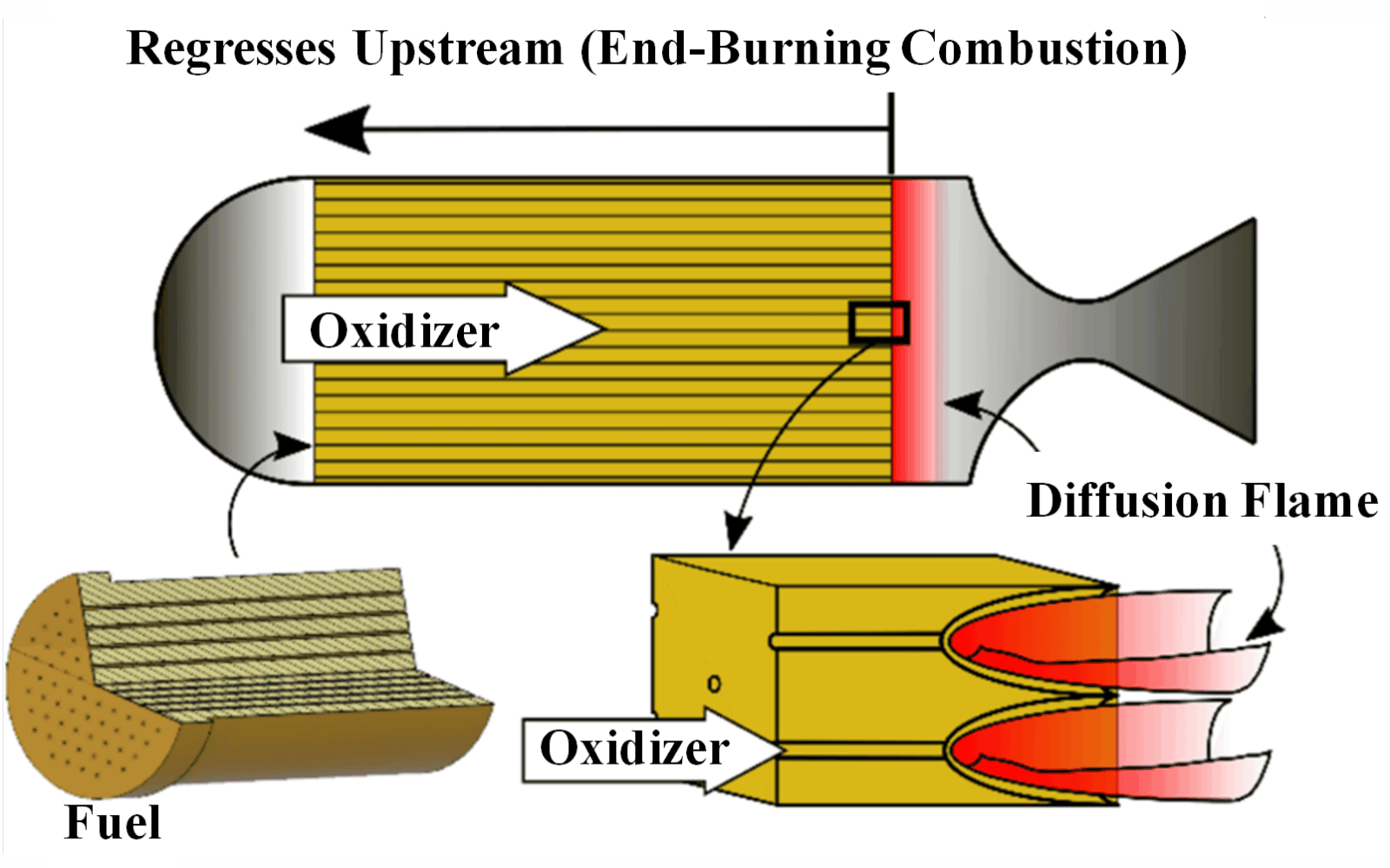
The Axial-Injection End-Burning (AIEB) hybrid rocket is a combustion concept that Nagata proposed in 1997 and has investigated ever since. In a conventional hybrid rocket, oxidizer flows through a port in the solid fuel, which burns radially, gradually enlarging the port. In the AIEB design, oxidizer instead travels through fuel grain with many small ports. Current combustion experiments primarily utilize a configuration containing 433 ports, each with a diameter of 0.3 mm. The port geometry, made possible by high-precision 3D printing, keeps combustion localized near the end face of the fuel and allows the fuel to regress predominantly in the axial direction. As a result, the burning surface area remains nearly constant, helping maintain a stable oxidizer-to-fuel ratio.
In 2015, the team achieved the world’s first successful combustion test using the AIEB method. There was, however, an important “but”: the demonstration used gaseous oxygen. “Gas was good to demonstrate that the combustion system works, but you can’t take it to space because the density is so low that it is impractical,” explains Nagata. “You could install a gasification system, but, again, you can’t afford extra weight in space. So, we thought, what happens if we use liquid oxygen while maintaining the same design?”
When his team obtained a four-year KAKENHI Grant-in-Aid in 2022, they expected that they were only one step away from experimentally demonstrating the concept with a liquid oxidizer. What they encountered instead was an unexpected flame-propagation phenomenon whose mechanism they still needed to understand.
The flames just “sneak in”: a puzzle at the solid-liquid interface
One important characteristic of the AIEB design is that its regression rate increases with chamber pressure. The team estimated that by supplying liquid oxygen at approximately 40 to 50 atmospheres, they can secure an optimal and stable fuel-to-oxidizer ratio and enable high-thrust hybrid rocket. But their earlier experiments with gaseous oxygen had already revealed that an AIEB engine using gaseous oxygen could not simply be taken to higher chamber pressures while maintaining the intended end-burning mode.
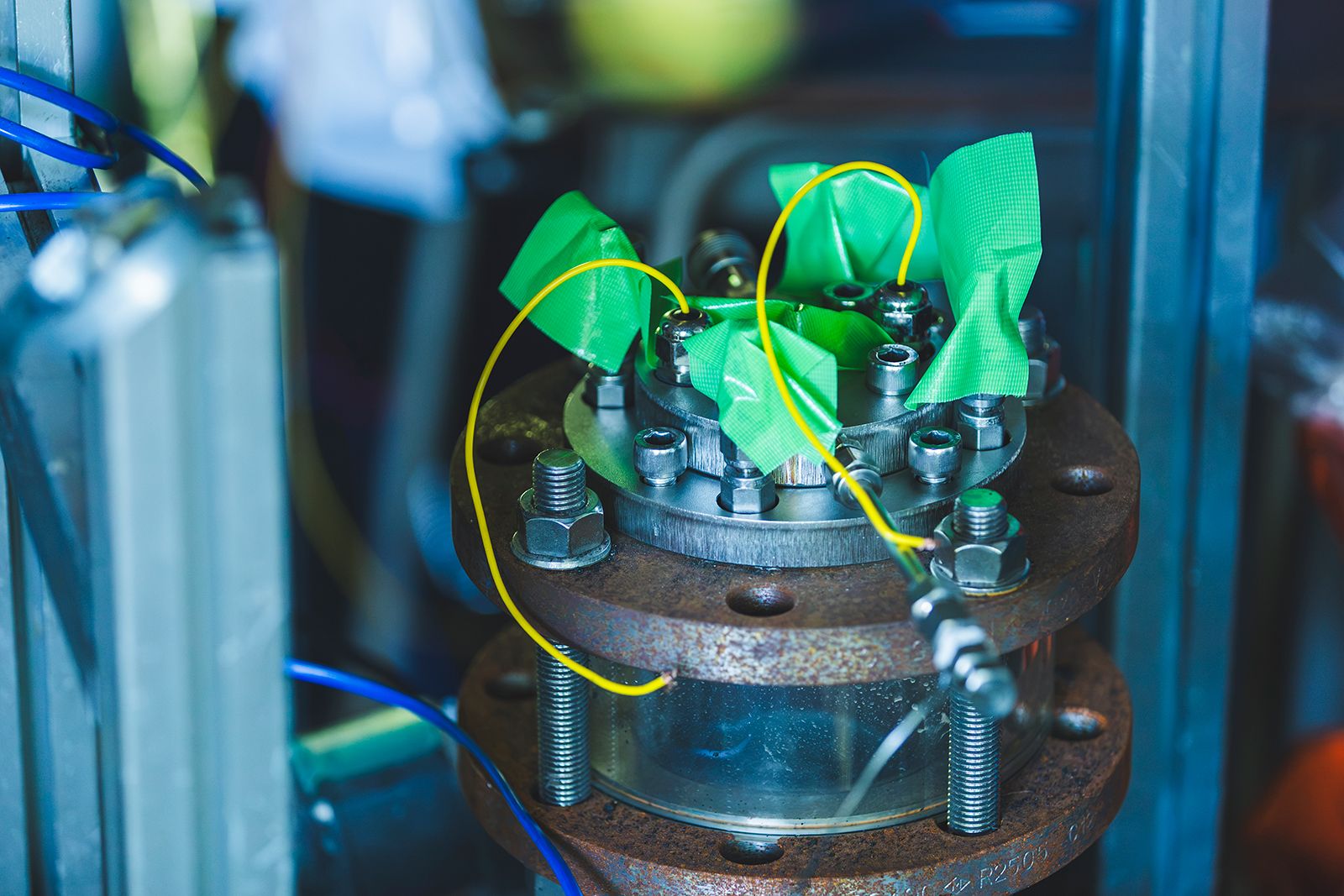
Nagata initially thought that liquid oxygen would avoid this problem. “We estimated that if liquid oxygen flowing at around one meter per second turned into gas, its velocity would become 100 or even 1,000 times higher. There was no way the flame could propagate upstream against that flow,” he explains. “But when we started the experiments, already at around 20 atmospheres the flame just sneaked in and spread inside the ports.”
“We were the first to observe flame spreading along the interface between a solid fuel and a liquid oxidizer at such high speeds,” comments Nagata. Once the flame enters the ports, the intended end-burning mode can no longer be maintained, posing a significant obstacle to maintaining the designed oxidizer-to-fuel ratio.
The researchers can now describe the conditions under which the transition occurs, but they still do not know its precise physical mechanism. “We already have a good grasp of what happens with a gaseous oxidizer, but there is something unusual happens here – some of the oxygen remains liquid, creating a solid–liquid interface”. Exactly what causes the flame to begin propagating along that interface remains an open question.
That question is now the focus of a five-year, 41-million-yen Grant-in-Aid for Scientific Research (A), awarded for 2026–2030. The team will investigate how flame propagation changes with factors including liquid-oxidizer flow velocity, pressure and flow-path diameter, seeking to identify the conditions governing different combustion behaviors and ultimately clarify the underlying mechanism.
Playing the numbers game: 100 combustion tests a year on campus
Just a few minutes’ walk from the engineering buildings, the campus gives way to lush greenery. Experimental agricultural fields begin only a few dozen meters away, and not far in the distance you can hear members of the tennis club practicing. Hidden among them is a plain building housing an explosion-proof experimental facility that predates rocket research in Hokkaido.
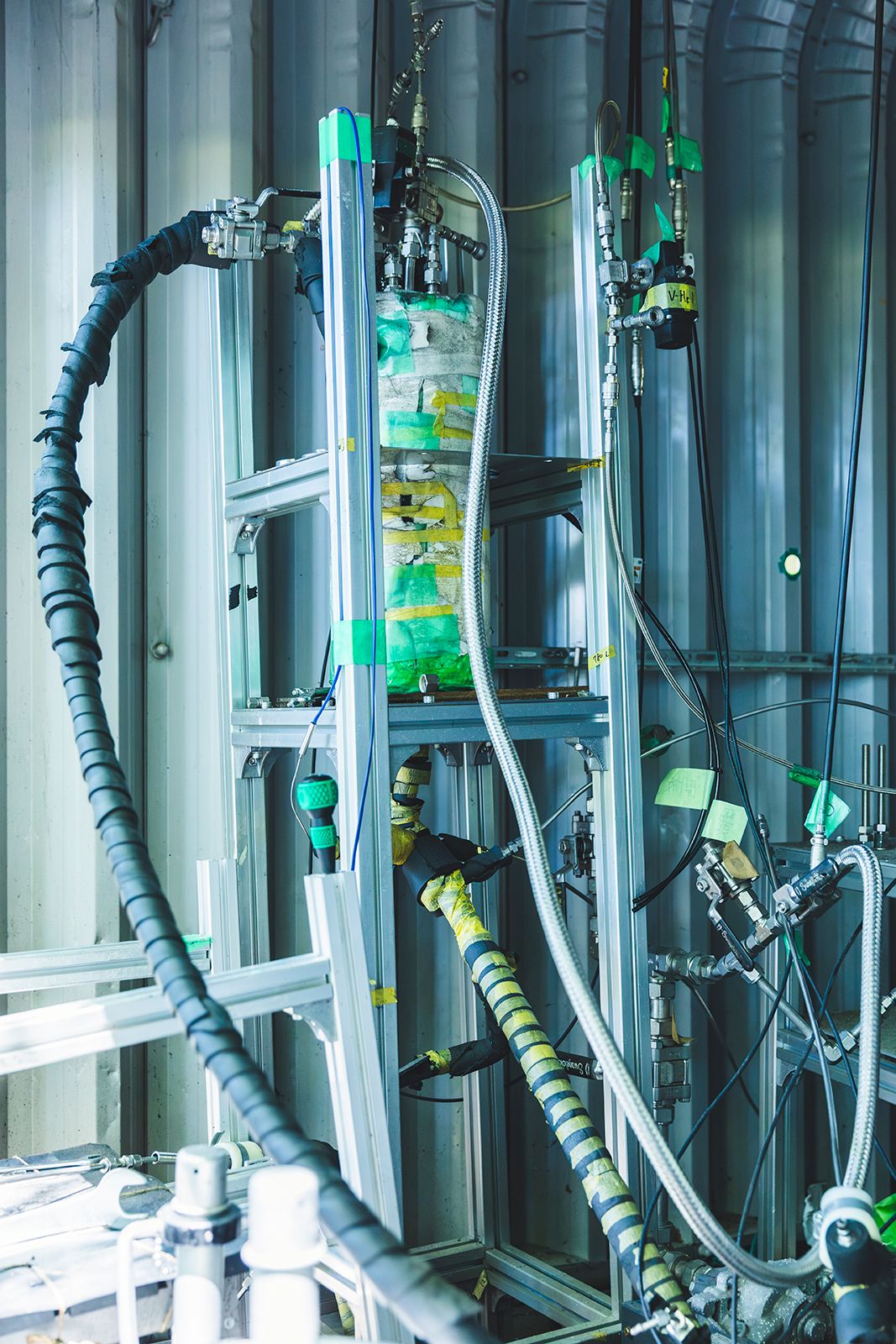
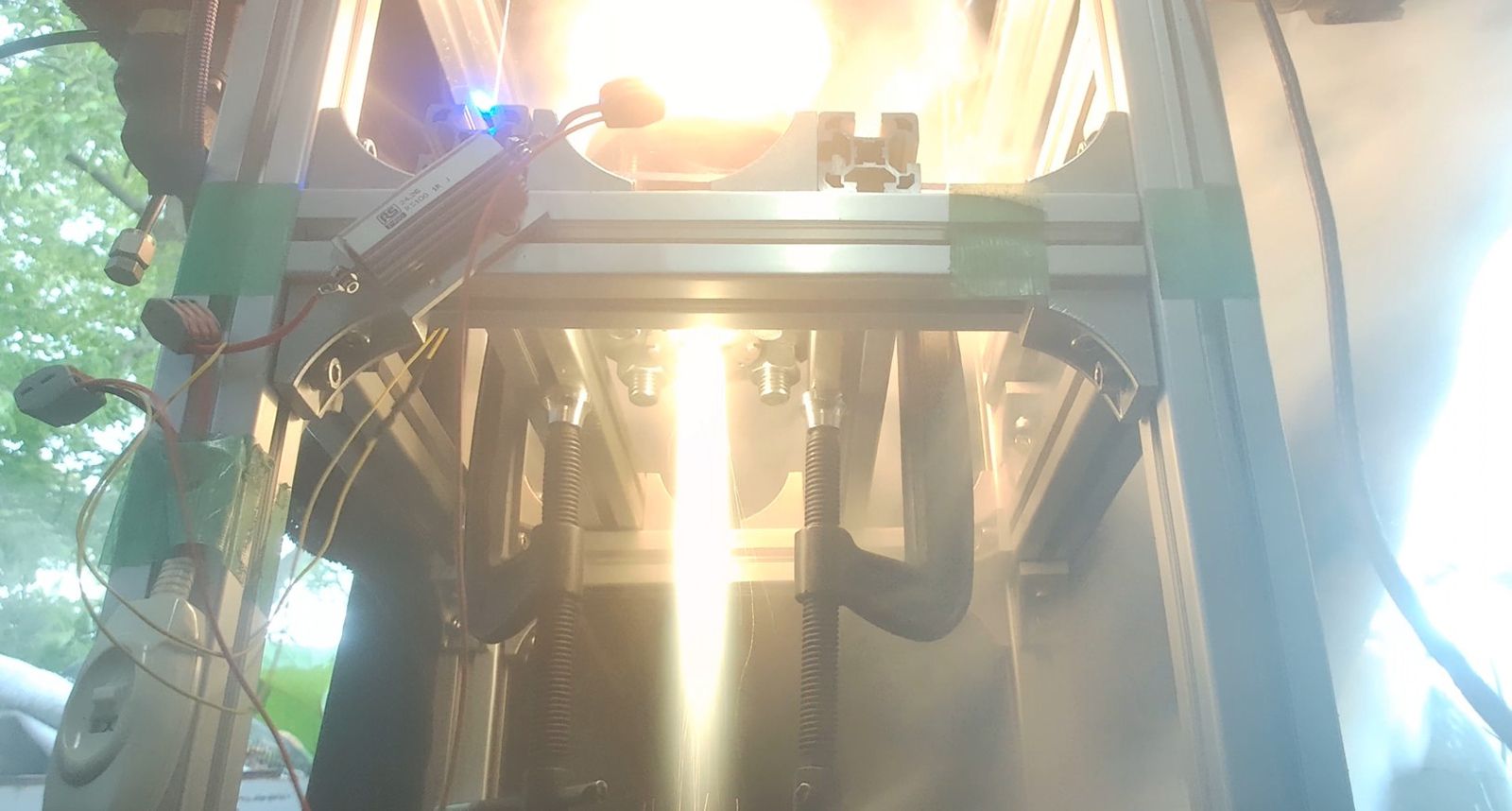
“Rocket combustion experiments are a numbers game,” says Nagata. “We need to conduct close to 100 tests a year, changing the conditions by millimeters and accumulating data. There probably aren’t many universities anywhere in the world where you can conduct ground firing tests of rocket motors right on campus, within walking distance of your laboratory.”
Nagata’s laboratory owes this unusual access to Hokkaido’s coal-mining history. Originally built for mining research, the facility was used to investigate the causes of underground dust explosions.
“In our laboratory, students accumulate highly valuable hands-on experience in setting up and conducting combustion experiments. That experience is particularly sought after by space ventures,” says Nagata. In 2020 a group of his own students found Letara, a startup that seeks to use plastic as cheap and safe fuel for hybrid rockets. The company has since received multiple awards and grants supporting its technology.
Nagata sees the appeal of space research in its potential to “create new value for society.” The extreme demands of space can lead researchers to explore phenomena and technologies that might otherwise receive little attention, and the ideas that emerge can eventually find applications in other fields.
The end-burning AIEB hybrid rocket is one such unconventional concept that continues to reveal new complexities and pose new questions for combustion science. As research towards its practical implementation continues, another roar of combustion test can be heard across the greenery of Hokkaido University’s campus.

Harunori Nagata
Professor
Division of Mechanical and Aerospace Engineering
Faculty of Engineering