
Featured
-
Research and Development of Core Technologies for Next-Generation Semiconductor Microfabrication
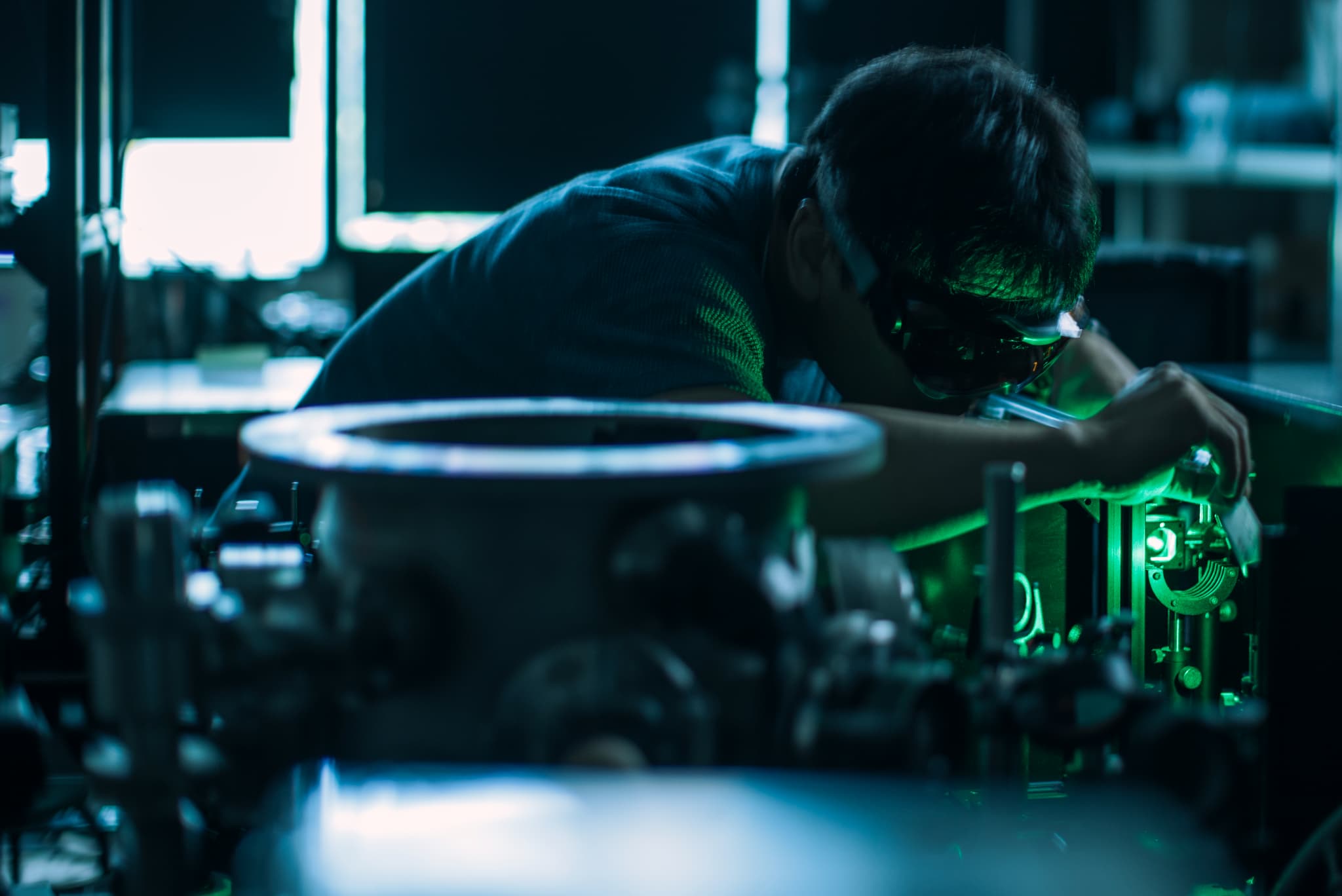
In April 2025, an R&D project for innovative fundamental technologies considered essential for the further development of next-generation semiconductor technologies has been launched, bringing together institutions and human resources with cutting-edge technologies related to EUV lithography (the overall principal investigator is Katsumi Midorikawa, special advisor to RIKEN). The research topics will mainly be the development of new lasers, mirrors for EUV, and laser microfabrication technology for back-end processing. In this project, Tomita will be responsible for the development of measurement and optimization techniques for the plasma for EUV light sources generated by the laser.
-
Creation of a Novel Evaluation Method for Assessing the Efficacy of Water Treatment Processes on Hard-to-Culture Viruses Without Relying on Conventional Cell Culture Approaches
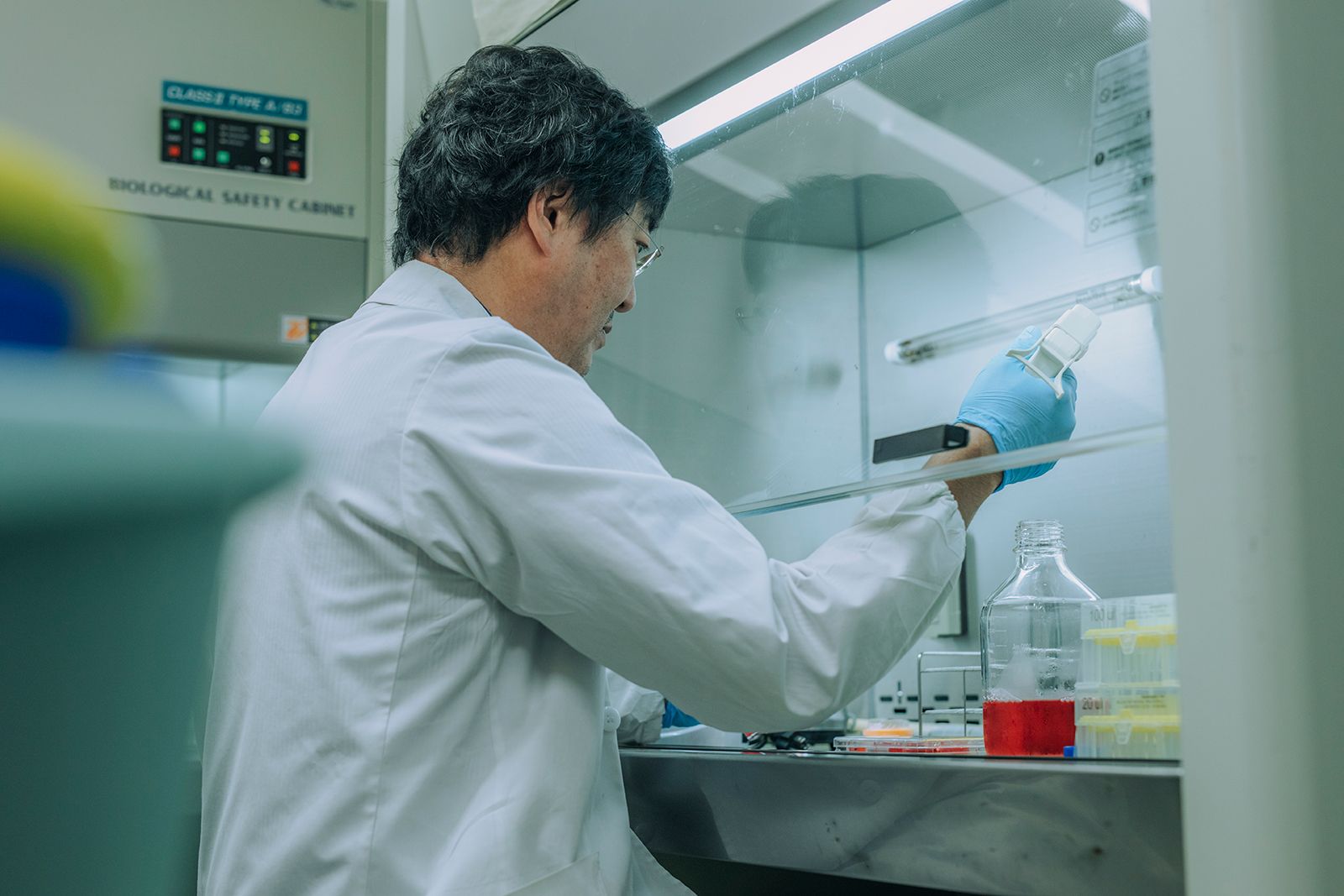
This study aims to elucidate the removability of “non-culturable” viruses, such as norovirus, in water treatment processes—whose behavior in such treatments remains completely unknown. In this study, virus-like particles (VLPs) composed of viral capsid proteins will be produced using genetic engineering techniques. By incorporating foreign genes into these VLPs using non-viral vector construction methods and applying them to water treatment experiments, we seek to establish a novel evaluation method for viral removability that does not rely on cultivation.
-
Mechanochemical activation of metallic lithium for the generation and application of organolithium compounds in air
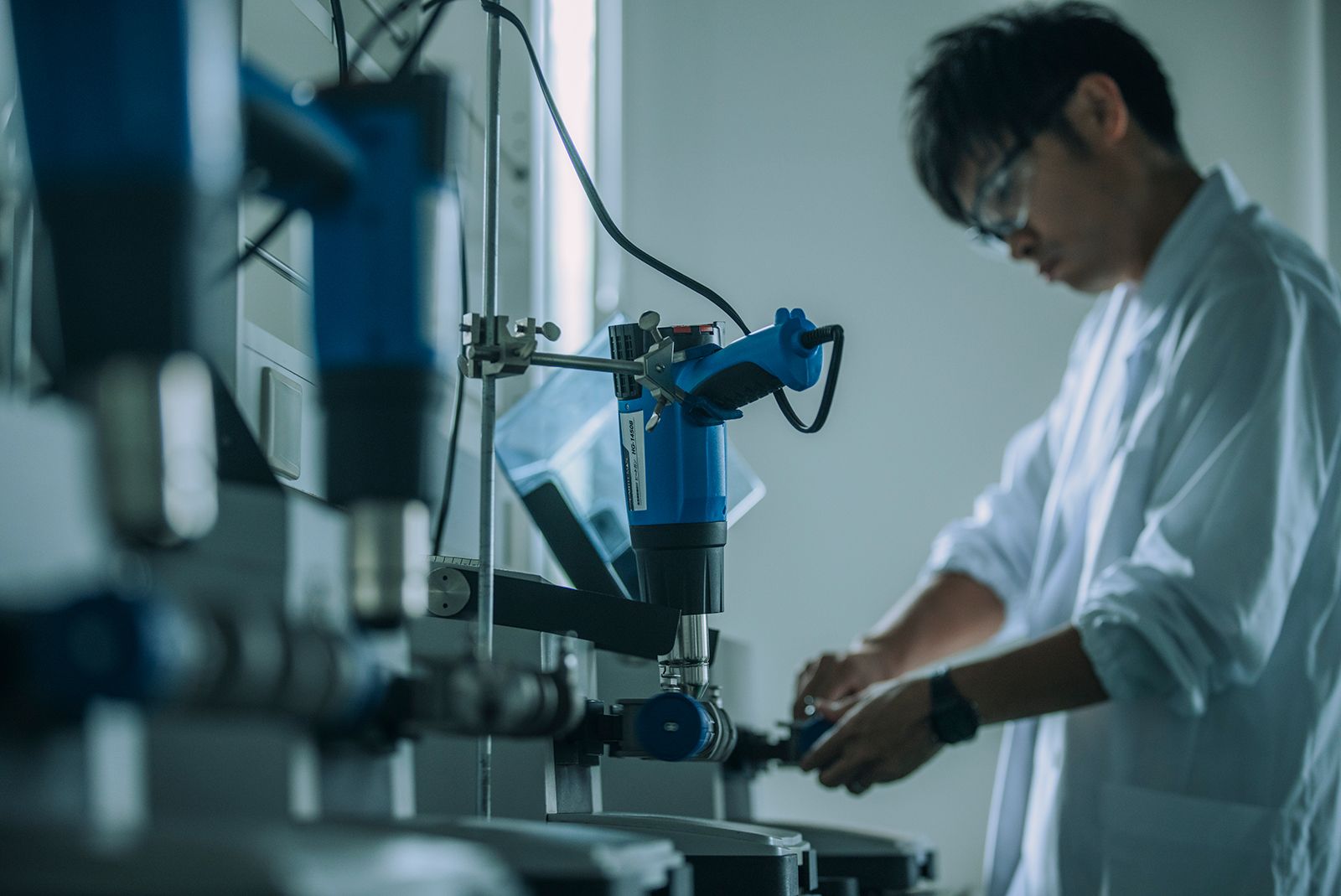
Here we report a mechanochemical method for the direct generation of organolithium reagents from readily available organic halides and unactivated lithium metal (lithium wire) under bulk-solvent-free conditions. These reactions rapidly generate a diverse array of organolithium compounds at room temperature without special precautions against moisture and without temperature control.
-
The Detail Matters: Unveiling Overlooked Parameters in the Mechanochemical Synthesis of Solid Electrolytes
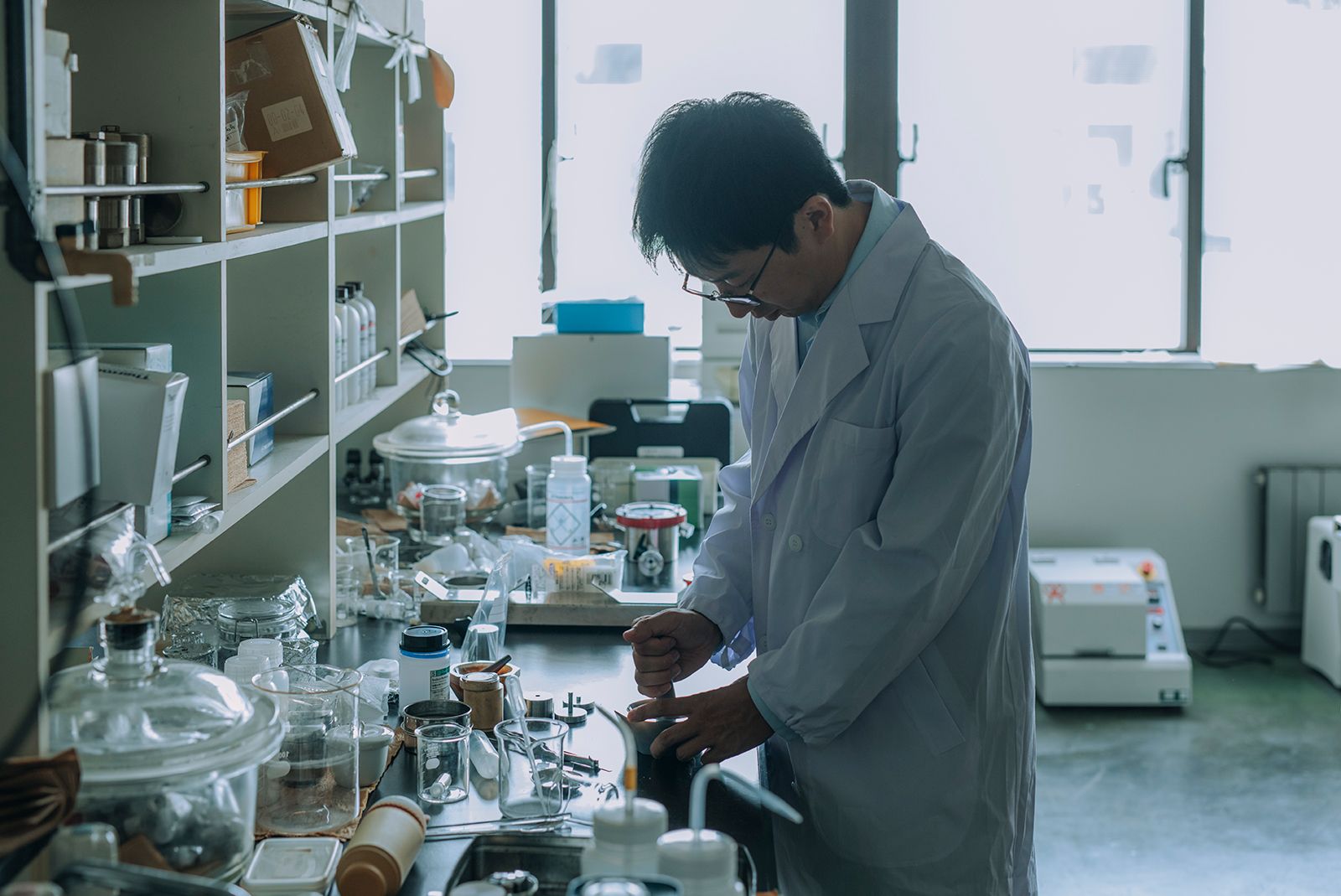
“Simply mixing the reagents by hand for a short time in a mortar and pestle before mechanochemical synthesis dramatically improves the performance of the solid electrolyte. Hand mixing changes the crystallization behavior, improving the ionic conductivity of the solid electrolyte by up to an order of magnitude. This discovery will accelerate the search for efficient and logical new electrolyte materials, and ultimately the development of all-solid-state batteries.”