

From the space environment to food resources: new materials science through the integration of neutron irradiation and imaging
Grants-in-Aid for Scientific Research(A) 2026.04.01~2030.03.31
From space to food resources: integrating neutron irradiation and imaging for new materials science
A new project at the Hokkaido University Neutron Source (HUNS) brings together two sides of neutron research: irradiation and imaging. Led by Associate Professor Hirotaka Sato, the project combines low-, intermediate- and high-energy neutrons to induce damage deep inside materials and then probe the resulting changes. From spacecraft materials to Japanese swords and, potentially, even food, the researchers are exploring how far, and how deep, neutron imaging can reach.
Building on half a century of neutron beam research
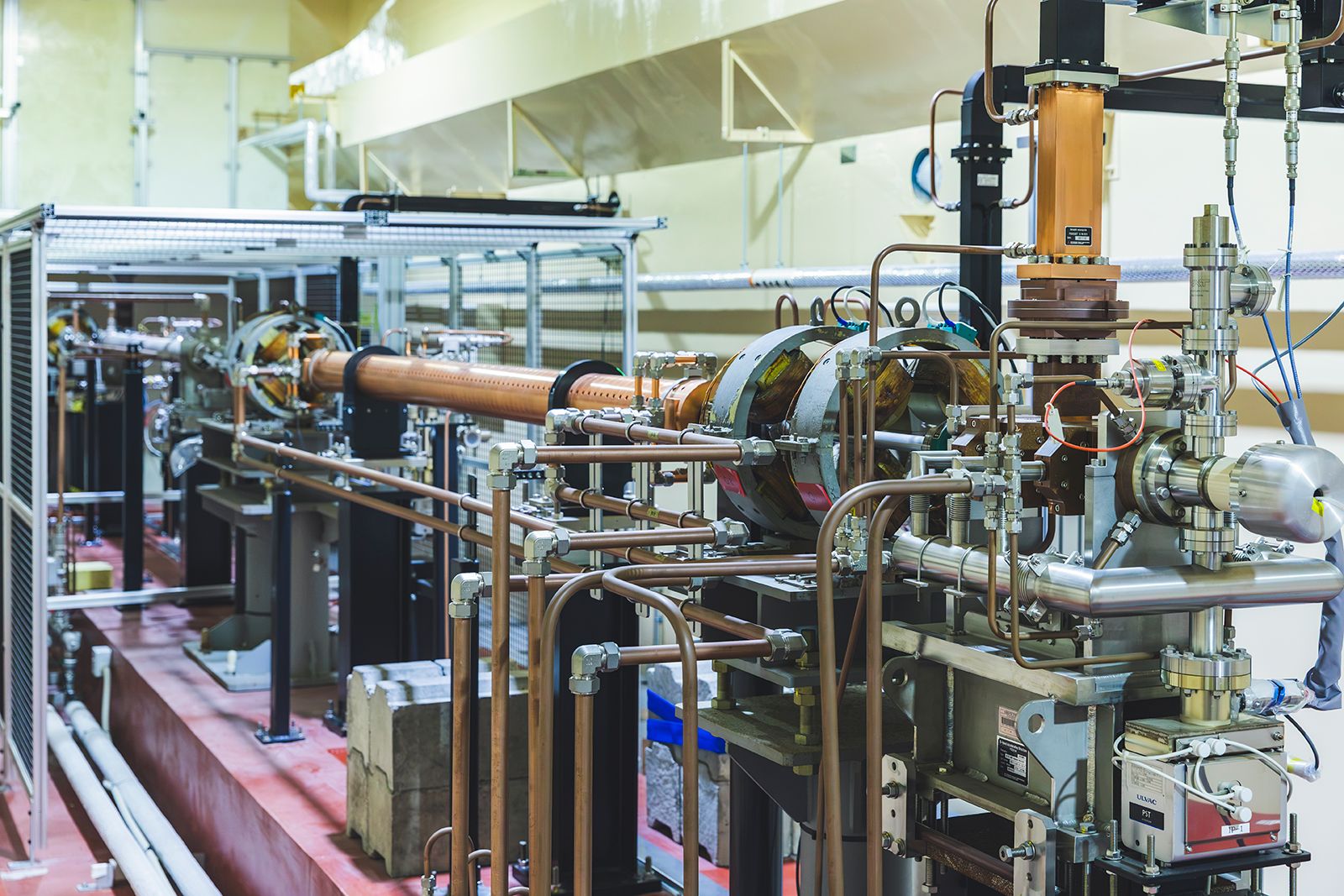
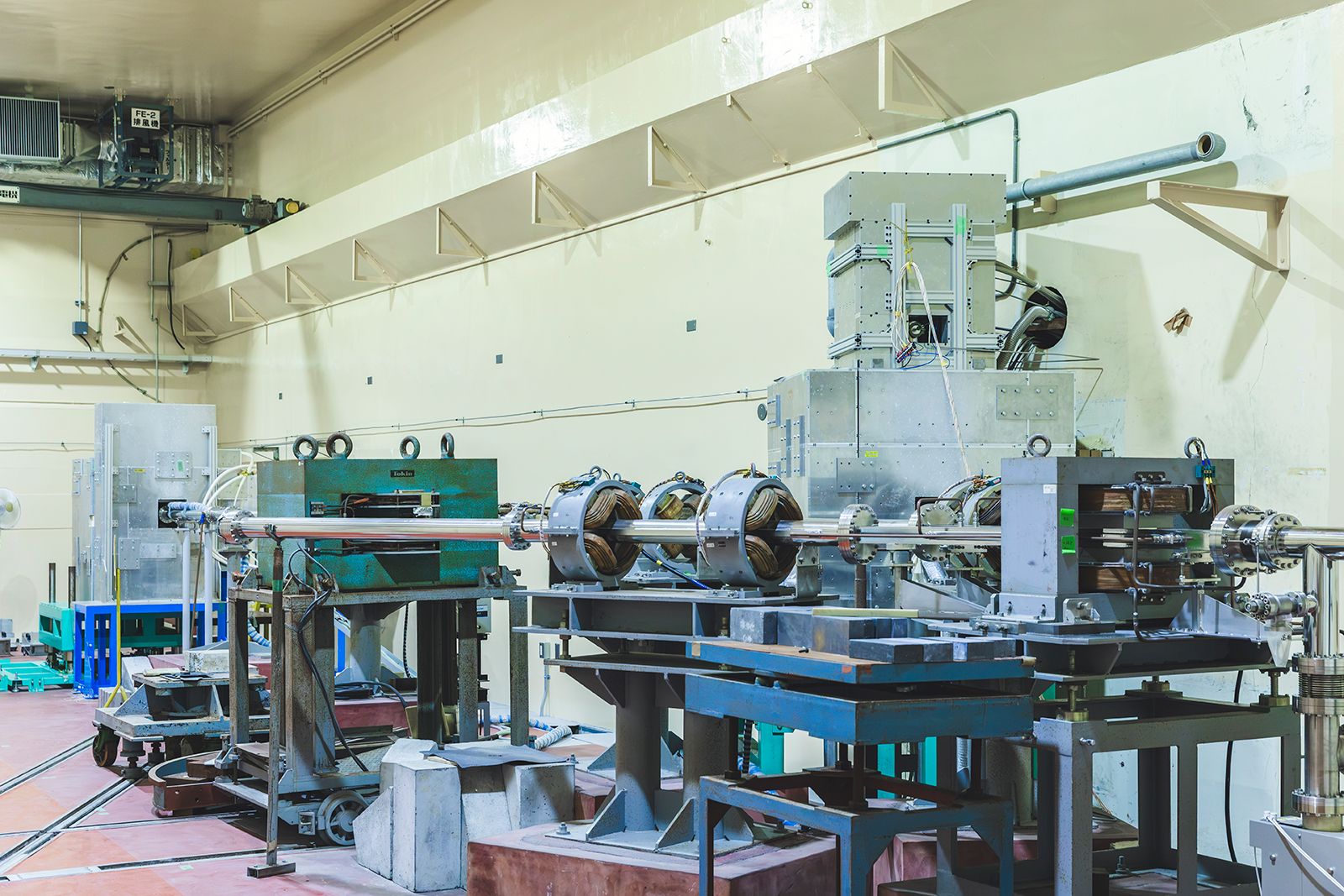
Walk past the research buildings that make up Hokkaido University’s Faculty of Engineering, and just before reaching the University Farm, you will come across a freshly renovated building with a much longer history beneath it. The Neutron Beam Experimental Facility, renovated in July 2025, below the ground houses LINAC, the electron linear accelerator, which drives HUNS, Hokkaido University’s compact pulsed neutron source. It is a place Hokkaido University’s neutron beam engineering researchers have been calling “home” for the past half-century.
The new four-year, JPY 41.99 million KAKENHI Grant-in-Aid project launched in fiscal 2026 builds on this long-established research infrastructure. In its assessment, the review panel highlighted the project’s effective use of Hokkaido University’s existing facilities and described its research plan to advance “new materials science through the integration of neutron irradiation and imaging” as “clear and original.”
Project leader Associate Professor Hirotaka Sato points out that the ability to make productive new use of infrastructure already in place acquires especial significance at a time when particle accelerators worldwide are facing a growing sustainability crisis.
“Maintaining particle accelerators is costly, and the nature of basic research is such that you cannot always expect immediate results. In today’s terms, you might say they do not offer a very good return on the investment. As a result, we have seen examples of accelerator facilities being shut down both in Japan and abroad,” explains Sato. “HUNS belongs to an early generation of compact accelerator-driven neutron sources and has continued to evolve while remaining in continuous use for over 50 years. Moreover, HUNS pioneered neutron imaging techniques that exploit the pulsed nature of the neutron source.”
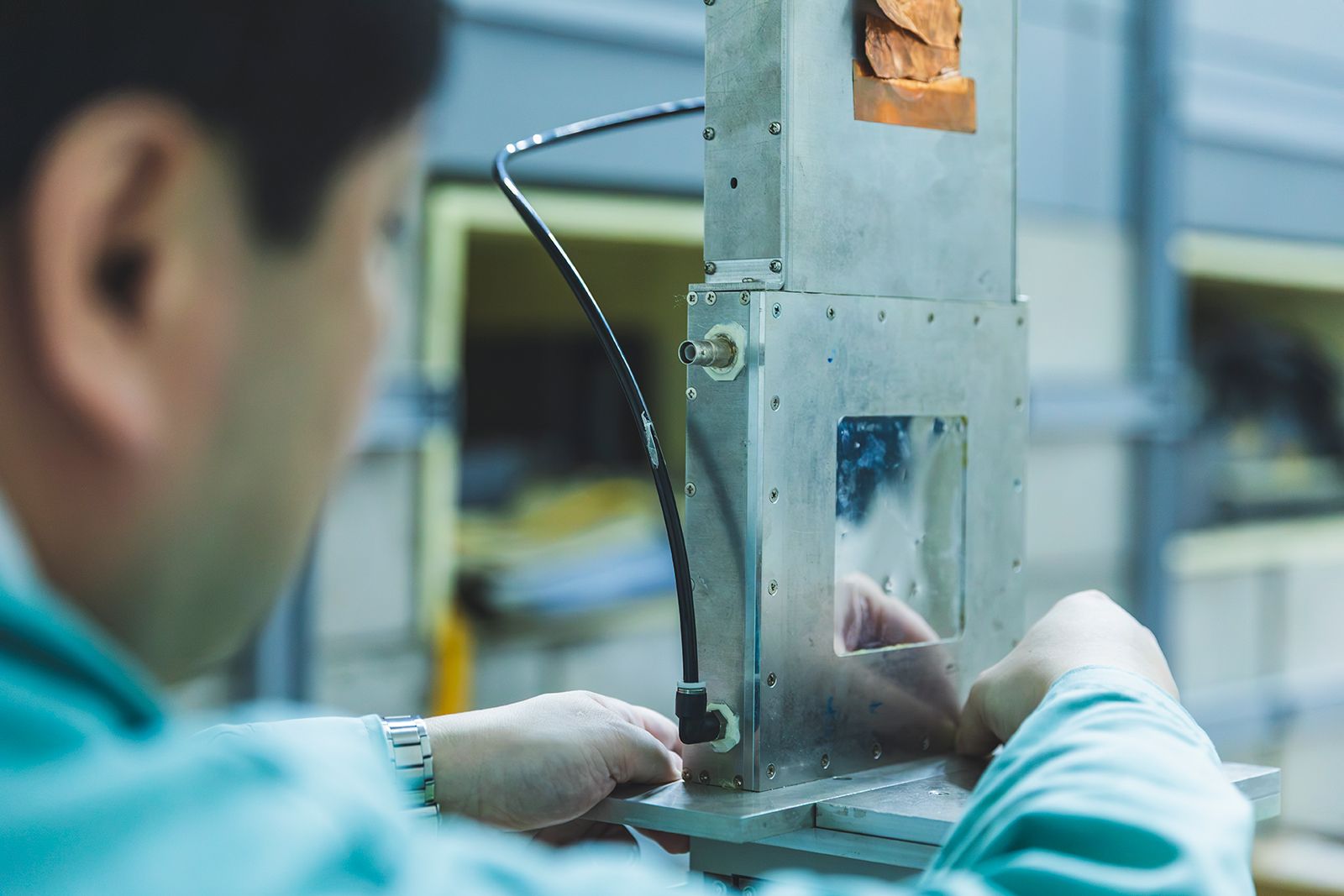
Within the same facility, Sato’s team uses neutron beams to reproduce aspects of cosmic-radiation damage and neutron imaging to analyze the resulting changes inside materials. “This is research that Hokkaido University is uniquely positioned to pursue,” says Sato.
Resolving the energy dilemma by integrating irradiation and imaging
Sato’s idea in a nutshell is to deliberately damage the material under investigation with a high-energy neutron beam and then use lower-energy neutrons to visualize the resulting changes inside.
“The key point is that we combine all three neutron-energy ranges available from the Hokkaido University LINAC: low, intermediate and high,” says Sato.
A major concern for spacecraft in space and nuclear materials on Earth is radiation damage caused by high-energy baryons, such as protons and neutrons, that can penetrate deep into materials. Yet both reproducing this deep, internal damage under laboratory conditions and determining what has happened inside the material remain challenging due to a range of factors.
Sato and his colleagues aim to overcome these limitations by using high-energy neutrons to induce defects deep within materials, while exploiting the resonance absorption of medium-energy neutrons and Bragg scattering of low-energy neutrons to obtain information about nuclear transmutation and atomic displacement.
However, using neutrons both as a source of irradiation and as an imaging method presents a dilemma. If the energy is too low, the neutrons cannot induce radiation damage; if it is too high, they cannot be used effectively for material analysis. At HUNS, researchers have already developed a range of irradiation and imaging techniques that allow them to use neutrons at energy levels appropriate for each purpose.
“The core scientific aim of our project is to resolve this ‘either too high or too low’ dilemma by developing a comprehensive irradiation and imaging technique that integrates the different functions of neutrons across all energy bands,” says Sato.
“At this stage, we have been able to simulate knock-on atomic displacement damage and nuclear-transmutation damage in organic materials and detect the resulting damage through neutron imaging experiments. Our next step is to quantitatively evaluate both the induction of damage and its consequences”.
The neutron imaging technology to be developed through the project could be applied to nondestructive analysis of cultural heritage, such as Japanese swords, and, in the future, to analyzing the dynamics of water molecules in food. It also has potential to inspire new applications in fields not yet foreseen.
A first step toward collaboration among Hokkaido University’s three major radiation facilities
Among the project collaborators is Professor Taeko Matsuura of the Laboratory of Quantum Beam Science and Medical Engineering, who specializes in proton-beam cancer treatment, bringing expertise in another type of baryon to the project. The project is also supported by Norifumi Abo, Specially Appointed Senior Specialist (Technical Scientist) at the Central Institute of Isotope Science.
“HUNS, the Hokkaido University Hospital Proton Beam Therapy Center and the Central Institute of Isotope Science is what could be called Hokkaido University’s three major radiation facilities,” Sato remarks. “Working together, we should be able to pursue research that is truly unique to Hokkaido University. I hope this project will become the first step toward realizing that potential.”
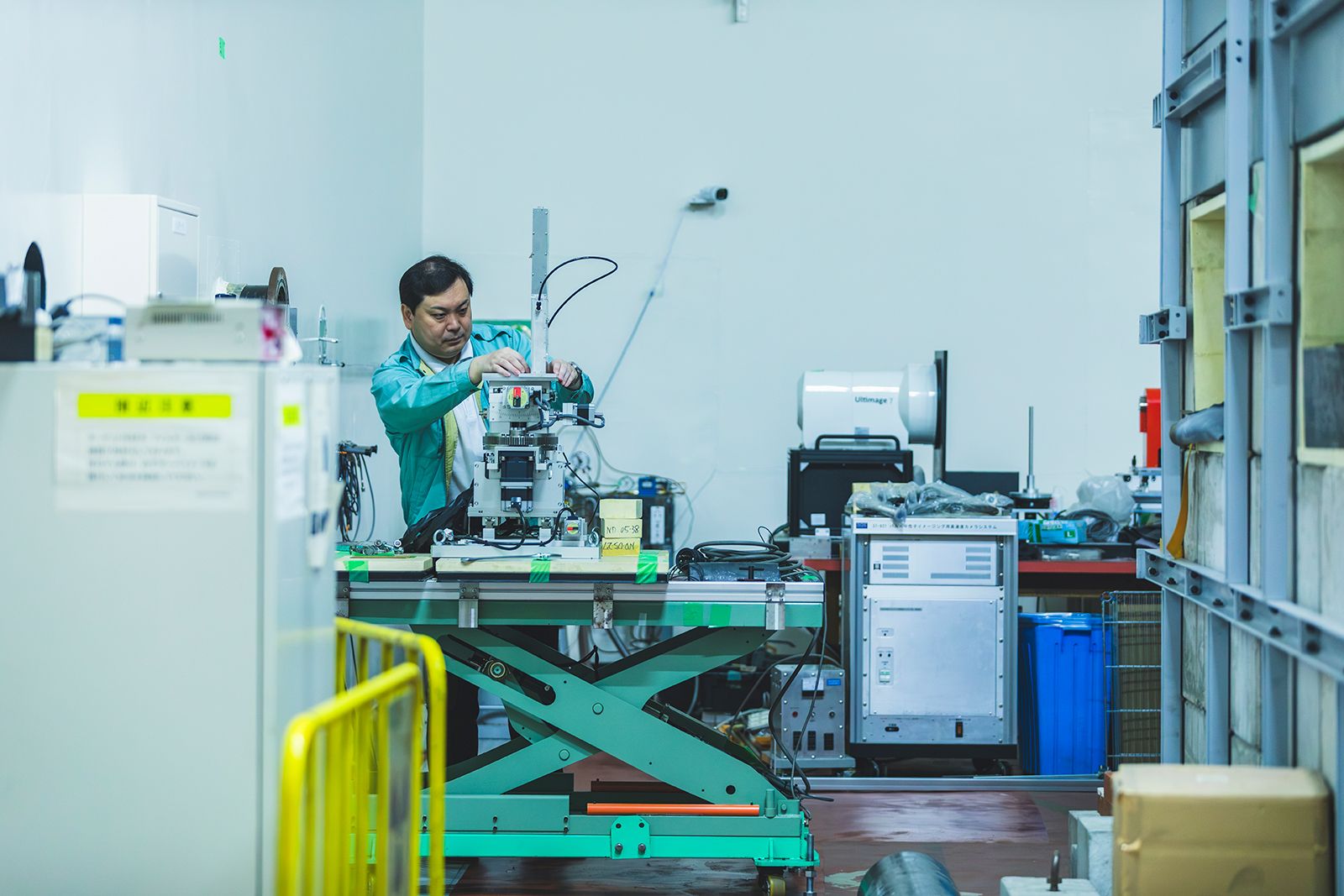
Talking about the Hokkaido University’s Faculty of Engineering research environment Sato says, “What gives researchers the confidence to pursue ideas that may be unconventional is knowing that originality carries more weight here than immediate, measurable returns.” He adds that what allows them to pursue original research is not just the capabilities of the compact particle accelerator, but unthinkable at a larger accelerator facility flexibility of research culture and mobility. For instance, taking advantage of the equipment’s flexibility in sample positioning, they are moving samples closer to the accelerator-driven neutron source when higher-energy irradiation is needed.
Sato first became fascinated by particle accelerators when, as a high school student, he read about them in the science magazine Newton. The same curiosity shapes how he approaches both research and education today. “Research does not advance if you only do what you are told. You shall find enjoyment in tackling difficult problems yourself,” he says. With this mindset, Sato continues to advance Hokkaido University’s long tradition of neutron-based irradiation and imaging research.
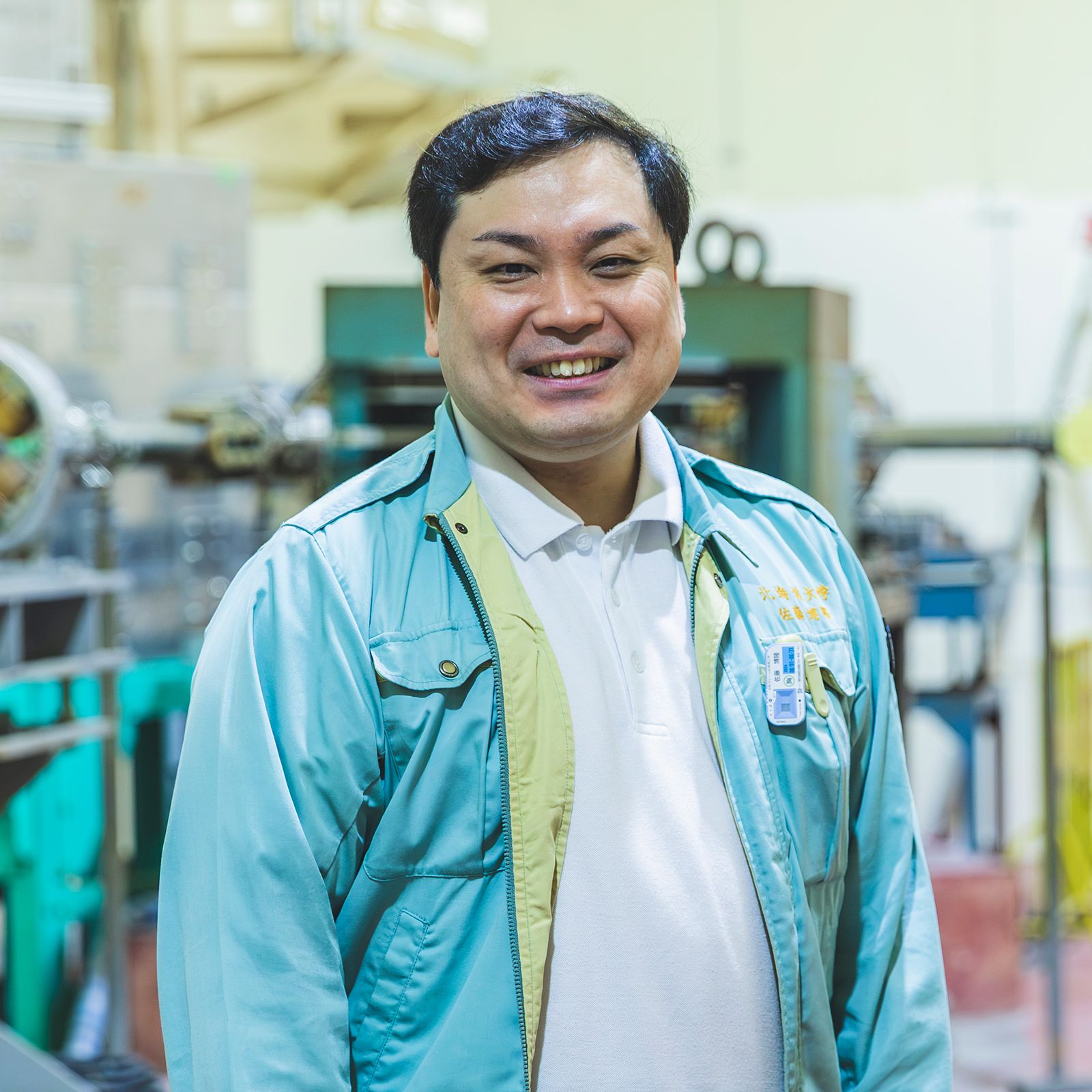
Hirotaka Sato
Associate Professor
Division of Applied Quantum Science and Engineering
Faculty of Engineering